Mosel is Germany's most famous wine region due to its dramatic, steep slate vineyards, iconic Riesling wines, and a winemaking tradition dating back to Roman times. This ancient region, carved by the winding Mosel River, produces some of the world's most elegant, mineral-driven white wines, offering a spectrum from bone-dry to lusciously sweet.
Why is Mosel Germany's most famous wine region?
Mosel's renown stems from its unparalleled terroir, historical significance, and the distinctive quality of its Riesling wines. Its breathtaking landscapes of terraced vineyards clinging to steep riverbanks are instantly recognizable, symbolizing a unique marriage of nature and viticulture.
The Ancient History of Mosel Viticulture
Winemaking in Mosel dates back to the Romans, who first planted vines here over 2,000 years ago. Evidence of Roman vineyards and wine presses highlights the region's enduring legacy as one of Europe's oldest wine-producing areas, establishing a deep-rooted tradition of excellence.
Steep Slopes and River Influence
The Mosel's steep slopes, some with gradients exceeding 60 degrees, are crucial for capturing sunlight and creating optimal growing conditions. These dramatic inclines, combined with the reflective surface of the Mosel River, ensure the Riesling grapes achieve full ripeness despite the northern latitude, imbuing the wines with exceptional balance and purity.
Riesling's Dominance and Purity
Riesling is the undisputed king of Mosel, embodying the region's signature style of wines that are intensely aromatic, high in acidity, and profoundly mineral. The grape expresses the unique slate terroir with remarkable clarity, producing wines that can range from light and refreshing to rich and complex, often with extraordinary aging potential.
What are the key characteristics of Mosel Riesling?
Mosel Riesling is primarily characterized by its bright acidity, distinctive slate minerality, and vibrant fruit notes, often displaying a delicate balance between sweetness and tartness. These wines are renowned for their purity, elegance, and ability to age gracefully, developing complex tertiary aromas over time.
Signature Slate Minerality
The presence of Devonian slate soils imparts a unique, stony minerality to Mosel Rieslings, often described as notes of wet stone, flint, or smoke. This mineral backbone is a hallmark of the region, contributing to the wines' refreshing character and exceptional length on the palate.
High Acidity and Ripe Fruit Flavors
Mosel Rieslings are celebrated for their racy acidity, which provides a vibrant structure and freshness, perfectly balancing the wine's ripe fruit flavors. Expect notes of green apple, lime, peach, and apricot, often complemented by floral undertones that evolve into honey and petrol notes with age.
Delicate Aromatics and Ageability
The aromatic profile of Mosel Riesling is typically delicate yet complex, offering a captivating bouquet that deepens and diversifies with bottle age. These wines possess remarkable ageability, with top examples capable of developing exquisite complexity for decades, making them sought-after by collectors.
Exploring Mosel's unique terroir and climate.
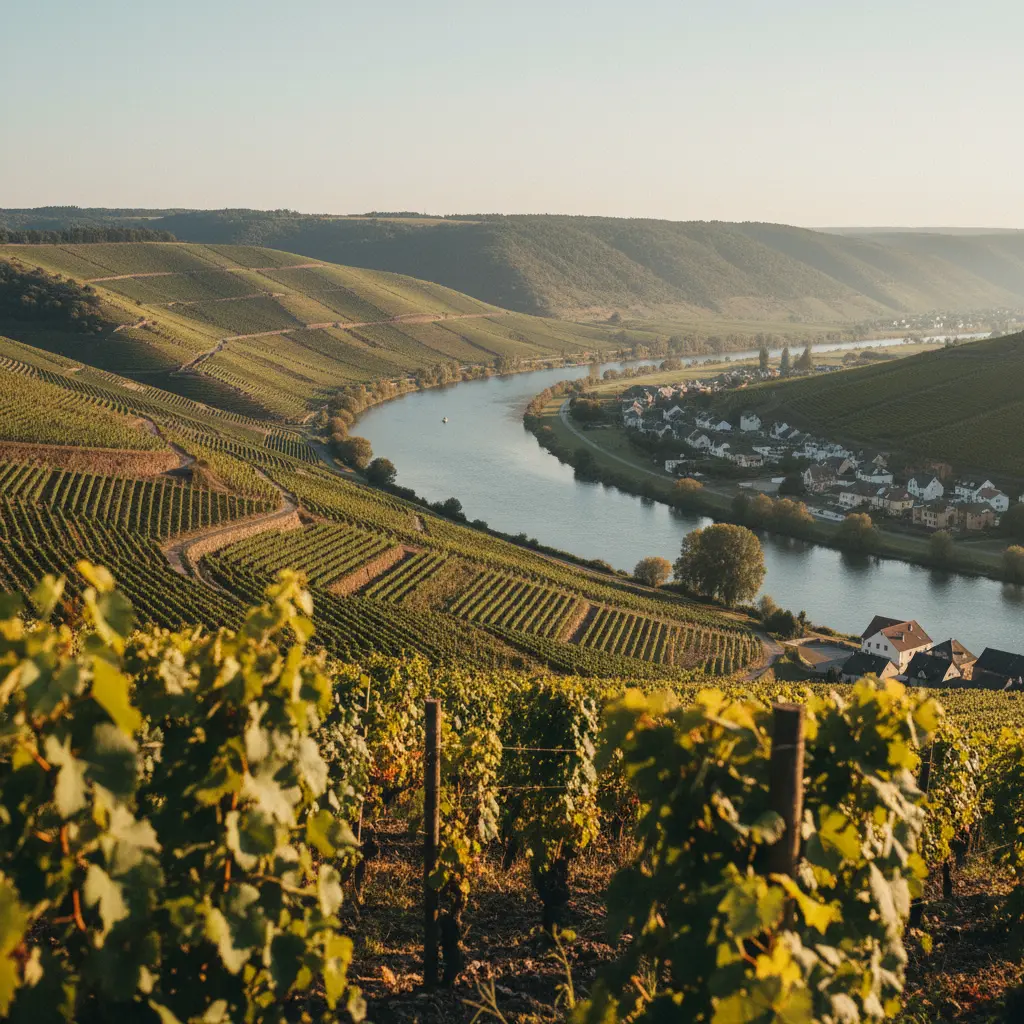
Mosel's terroir is defined by its deep, meandering river valley, dramatic south-facing slate slopes, and a cool continental climate tempered by the river's presence. This combination creates a unique microclimate essential for producing Riesling of exceptional quality and character.
"The Mosel is a region where the struggle of the vine on incredibly steep slopes meets the beneficence of the river and slate, creating wines of singular intensity and grace." - A leading wine critic.
The Mosel River's Role in Microclimates
The Mosel River acts as a giant mirror, reflecting sunlight onto the steep vineyards, significantly increasing the grapes' exposure and aiding ripening. It also moderates temperatures, protecting vines from harsh frosts in winter and extreme heat in summer, creating ideal conditions for slow, even maturation.
Devonian Slate Soils: A Foundation for Flavor
The predominant Devonian slate soils retain heat from the sun and release it slowly overnight, providing consistent warmth to the vines. This slate also imparts distinct mineral notes to the wines, contributing to their signature complexity and age-worthiness, making them truly unique among white wines.
Steepest Vineyards in the World
Mosel boasts some of the steepest vineyards globally, such as the Bremmer Calmont, which requires manual cultivation and makes mechanical harvesting impossible. These extreme slopes ensure optimal sun exposure and drainage, but also make viticulture incredibly labor-intensive, underscoring the dedication of Mosel winemakers.
Which grape varieties thrive in Mosel?
While Riesling dominates Mosel, other grape varieties like Elbling, Müller-Thurgau, and even some Pinot Noir also find suitable conditions in the region. However, Riesling remains the focal point, accounting for over 60% of the total vineyard area.
Riesling: The Undisputed King
Riesling is Mosel's flagship grape, thriving in its unique terroir to produce wines celebrated for their purity, acidity, and aromatic complexity. It is the grape that best expresses the region's slate soils and cool climate, offering a versatile range of styles from dry to intensely sweet.
Elbling and Müller-Thurgau: Lesser-Known Whites
Elbling, one of Europe's oldest cultivated grape varieties, produces simple, crisp, and high-acid wines, often used for sparkling Sekt. Müller-Thurgau, while less prestigious than Riesling, yields approachable, fruity wines for early consumption, contributing to local consumption rather than international export.
Pinot Noir (Spätburgunder): A Growing Red Presence
Though primarily a white wine region, Mosel is seeing a small but growing presence of Pinot Noir (Spätburgunder), particularly in warmer vineyard sites. These wines tend to be lighter-bodied, elegant, and fruit-driven, offering a different expression of the region's potential.
What are the main wine styles of Mosel?
Mosel produces a wide spectrum of wine styles, ranging from bone-dry (Trocken) to intensely sweet (Beerenauslese and Trockenbeerenauslese), with off-dry and subtly sweet styles being historically prominent. These styles are often categorized by their residual sugar levels and ripeness at harvest.
Dry (Trocken) Mosel Wines
Dry Mosel wines, labeled 'Trocken,' are characterized by their crisp acidity, pronounced minerality, and vibrant citrus fruit profile, making them excellent food wines. These wines have very little to no residual sugar, offering a stark contrast to the region's traditional sweeter styles.
Off-Dry (Feinherb) and Kabinett Styles
Off-dry wines, often labeled 'Feinherb,' offer a hint of sweetness that balances their acidity without being cloying, making them incredibly versatile. Kabinett wines, the lightest style of Prädikat wine, are made from grapes with relatively low must weight, resulting in delicate, fruit-driven wines with a refreshing lift, typically off-dry.
Sweet (Spätlese, Auslese, Beerenauslese, TBA) Wines
Mosel excels in producing natural sweet wines, categorized by the ripeness of the grapes at harvest. Spätlese (late harvest) and Auslese (selected harvest) are increasingly sweet, while Beerenauslese (selected berries) and the rare Trockenbeerenauslese (dry selected berries) are opulent, honeyed wines made from botrytized grapes.
Sekt: Sparkling Wine from Mosel
Mosel also produces high-quality Sekt, Germany's sparkling wine, predominantly from Riesling grapes. Mosel Sekt offers vibrant acidity, fine bubbles, and fresh fruit aromas, often made using the traditional method, making it an elegant alternative to other sparkling wines.
Mosel Wine Styles and Sweetness Levels
| Wine Style | Sweetness Level | Key Characteristics | Typical Food Pairings |
|---|---|---|---|
| Trocken (Dry) | Dry | Crisp, mineral, high acidity, citrus. | Seafood, chicken, salads. |
| Feinherb (Off-Dry) | Off-Dry | Balanced sweetness, fruity, refreshing. | Asian cuisine, spicy dishes, charcuterie. |
| Kabinett | Off-Dry to Semi-Sweet | Light, delicate, green apple, slate. | Light poultry, mild cheese, fruit. |
| Spätlese | Sweet | More intense fruit, honey, richer body. | Pork, duck, rich seafood, fruit desserts. |
| Auslese | Sweet | Concentrated, noble rot often present, complex. | Foie gras, strong cheese, crème brûlée. |
| Beerenauslese (BA) & Trockenbeerenauslese (TBA) | Very Sweet / Luscious | Intense honey, dried fruit, botrytis notes. | Desserts, blue cheese, or enjoyed alone. |
Navigating Mosel's top vineyards and appellations.
Mosel is divided into six distinct sub-regions, known as Bereiche, each with its own character, while specific single vineyards (Einzellagen) are renowned for producing the highest quality wines. Understanding these geographical designations helps in appreciating the nuanced differences across the region.
Mosel's Six Sub-Regions (Bereiche)
The Mosel region comprises six Bereiche: Moseltor, Obermosel, Saar, Ruwer, Mittelmosel, and Untermosel (Terrassenmosel). Mittelmosel is the heart of the region, home to many of the most famous vineyards, while Saar and Ruwer are known for their cooler climates and more delicate Rieslings. Learn more about other famous wine regions here.
Famous Einzellagen: Wehlener Sonnenuhr, Bernkasteler Doctor
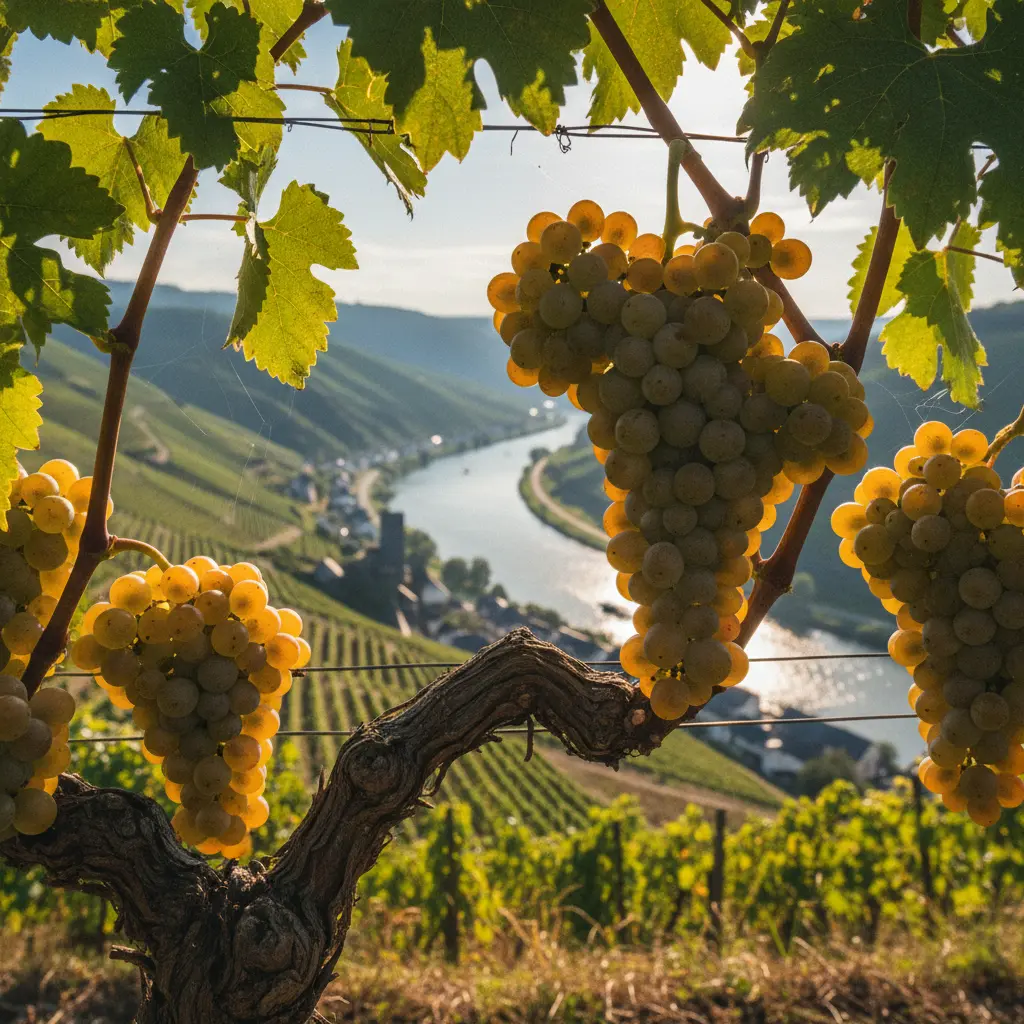
Specific vineyards like Wehlener Sonnenuhr (Sundial) and Bernkasteler Doctor are globally recognized for their exceptional terroir and consistent production of world-class Rieslings. These 'Grand Cru' level sites often yield wines of incredible complexity, concentration, and longevity, reflecting their unique microclimates and slate compositions.
VDP Classification: Grosse Lage and Erste Lage
The VDP (Verband Deutscher Prädikatsweingüter) classification system designates Germany's top vineyards, with Grosse Lage representing Grand Cru equivalent sites and Erste Lage denoting Premier Cru vineyards. Wines from these sites uphold strict quality standards, emphasizing terroir expression and natural winemaking.
How to pair Mosel wines with food?
Mosel wines, particularly Riesling, are incredibly versatile with food, capable of enhancing a wide array of dishes from light appetizers to complex main courses and desserts. Their vibrant acidity and spectrum of sweetness allow for diverse pairings. For a more general approach, consult a comprehensive wine pairing guide.
Dry Riesling Pairings
Dry Mosel Rieslings pair exceptionally well with delicate seafood, poultry, fresh salads, and light appetizers due to their crisp acidity and minerality. Think oysters, grilled fish, chicken schnitzel, or goat cheese salads, where the wine's freshness cuts through richness and complements subtle flavors. For great appetizers to serve, see our guide on best wine starters.
Off-Dry and Sweet Riesling Pairings
Off-dry and sweeter Mosel Rieslings are superb with spicy Asian cuisine, pork dishes, and rich, creamy sauces, as their sweetness beautifully balances heat and fat. Spätlese and Auslese wines also make fantastic companions to fruit-based desserts, blue cheeses, or foie gras, creating luxurious culinary experiences.
Versatility with Asian Cuisine
Mosel Rieslings are celebrated for their exceptional affinity with various Asian cuisines, particularly Thai, Vietnamese, and Chinese dishes. The wines' natural sweetness can tame chili heat, while their acidity provides a refreshing contrast to rich flavors, making them a go-to choice for complex, aromatic meals.
Planning a wine tour: Must-visit Mosel wineries.
A wine tour of Mosel offers breathtaking scenery, historic towns, and opportunities to taste world-class Rieslings directly from their producers. Planning your visit strategically will ensure a memorable experience exploring both iconic and emerging wineries.
Iconic Producers: Egon Müller, Joh. Jos. Prüm
Wineries like Egon Müller and Joh. Jos. Prüm are legendary in Mosel, known for their meticulous craftsmanship and consistently producing some of the world's most highly sought-after, age-worthy Rieslings. Visiting these estates, often by appointment, provides insight into the region's top-tier winemaking.
Emerging Stars and Family Estates
Beyond the established giants, numerous smaller, family-run estates and emerging producers are crafting exceptional Mosel wines, often with innovative approaches. These wineries provide a more intimate tasting experience and opportunities to discover hidden gems and passionate winemakers.
Best Times to Visit and Festival Highlights
The best time to visit Mosel is from late spring to early autumn (May to October), when the weather is pleasant, and vineyards are lush. Harvest season in September/October offers a vibrant atmosphere, while numerous wine festivals throughout the summer provide opportunities to celebrate the local culture and wines.
Understanding Mosel wine classifications.
German wine law, with its Prädikat system, primarily classifies Mosel wines based on the ripeness of grapes at harvest, reflecting natural sweetness, while the VDP system focuses on vineyard quality. Deciphering these classifications is key to understanding a Mosel wine's style and quality.
German Prädikat System Explained
The Prädikat system classifies wines from Kabinett (lightest) through Spätlese, Auslese, Beerenauslese, to Trockenbeerenauslese (sweetest and ripest), based on the grapes' sugar content at harvest. These designations signify natural sweetness, as chaptalization (adding sugar) is forbidden for Prädikat wines.
Dry Wine Classifications: VDP vs. Regional
While the Prädikat system traditionally emphasizes sweetness, the VDP association has developed its own classification for dry wines, categorizing top dry wines from Grosse Lage vineyards as 'Grosses Gewächs' (GG). This allows consumers to identify premium dry wines based on terroir, complementing the traditional sweetness-based system.
Reading a Mosel Wine Label
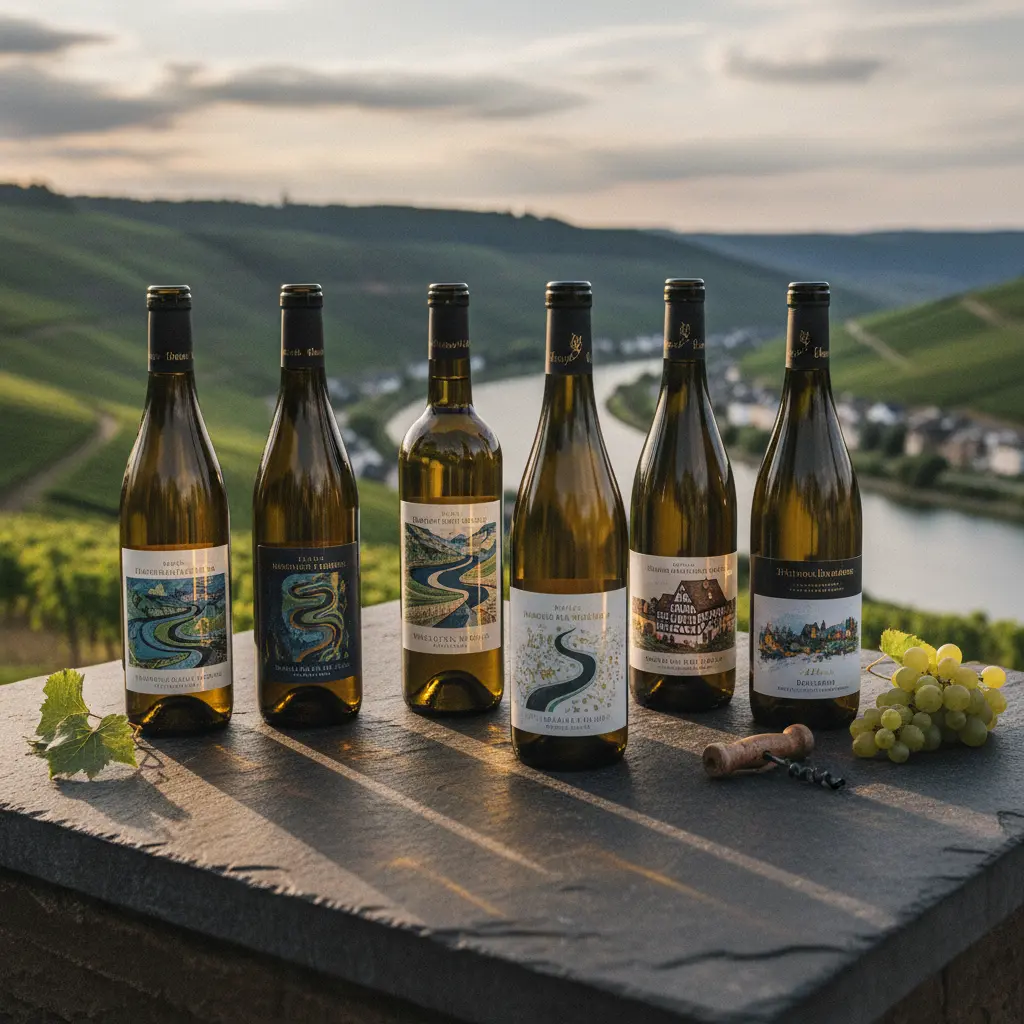
A Mosel wine label provides vital information, including the producer, vintage, vineyard (Einzellage) or village (Ortsteil), and the Prädikat level (Kabinett, Spätlese, etc.) or 'Trocken' for dry wines. Understanding these terms helps in selecting the desired style and quality.
Buying Mosel wine: Tips for selecting the best bottles.
Selecting the best Mosel wines involves understanding key producers, vintage variations, and proper storage and serving techniques to fully appreciate their unique characteristics. A little knowledge can significantly enhance your enjoyment of these exceptional wines.
Identifying Quality Producers
Look for wines from highly regarded producers such as Egon Müller, Joh. Jos. Prüm, Markus Molitor, Dönnhoff (Nahe, but often associated), and Schloss Lieser, whose commitment to quality is consistently high. Exploring VDP member estates also guarantees a certain level of excellence and terroir focus.
Understanding Vintage Variation
Mosel's cool climate means vintage variation can be significant, impacting ripeness and style. Researching specific vintages can help you choose wines from years known for exceptional quality or a particular style you prefer, whether it's crisp and delicate or rich and concentrated.
Storage and Serving Recommendations
Mosel Rieslings should be stored in a cool, dark place with consistent temperature, preferably on their side for cork-sealed bottles, to ensure optimal aging. Serve them chilled, typically between 8-12°C (46-54°F), using appropriate wine glasses to enhance their delicate aromatics. For the best experience, consider mastering proper wine service techniques.
How to Properly Taste Mosel Riesling
- Chill Appropriately: Ensure your Mosel Riesling is served at the ideal temperature (8-12°C or 46-54°F) to highlight its crispness and aromatic complexity.
- Select the Right Glass: Use a white wine glass with a slightly narrower rim to concentrate the delicate floral and fruity aromas.
- Observe the Wine: Note the color, which can range from pale straw for young dry wines to deep gold for aged sweet wines.
- Swirl and Smell: Gently swirl the wine to release its bouquet. Look for notes of green apple, lime, peach, apricot, and distinctive slate minerality.
- Taste and Evaluate: Take a sip, allowing the wine to coat your palate. Pay attention to the vibrant acidity, fruit flavors, and the balance of sweetness (if any). Note the finish and lingering aftertaste.
- Consider Food Pairing: Think about how the wine's characteristics could complement certain dishes, from delicate seafood to spicy Asian cuisine.