Why Might You Need an Alternative Opening Method?
You might need an alternative opening method when your corkscrew is lost, broken, or simply forgotten, especially while traveling or in unexpected situations. This common predicament often arises during picnics, holidays, or when enjoying a special bottle away from home, preventing you from appreciating a fine aged wine or a new discovery from Italy's premier wine regions.
Forgotten Corkscrew at a Picnic
Forgetting a corkscrew is a surprisingly common oversight that can quickly turn a pleasant picnic into a frustrating one. Whether it's a casual rosé or a robust Cabernet Sauvignon, an unopened bottle at an outdoor gathering necessitates a quick, improvised solution.
Traveling Without the Right Tools
When traveling, packing restrictions or oversight can leave you without essential wine accessories, making improvisation key. Imagine acquiring a unique bottle of unique wine during your travels only to find yourself without the proper tool to open it back at your accommodation.
Old, Fragile Corks
Older wines often have fragile corks that can crumble or break even with a corkscrew, making alternative, gentle methods advantageous. These situations demand a careful approach to preserve both the wine and the integrity of the bottle opening, preventing cork bits from contaminating your pour.
The Shoe Method: A Classic Emergency Technique
The shoe method involves using a shoe to repeatedly and gently tap the bottle against a sturdy surface, gradually easing the cork out with kinetic energy. This technique is surprisingly effective and relies on building up pressure inside the bottle to push the cork outwards, making it a favorite for many wine enthusiasts in a pinch.

Step-by-Step Guide to the Shoe Method
To execute the shoe method successfully, follow these steps precisely to ensure safety and effective cork removal.
- Prepare the Bottle: Remove any foil or capsule from the bottle's neck.
- Position the Shoe: Place the base of the wine bottle into the opening of a shoe (preferably a sturdy sneaker or dress shoe with a padded heel). Ensure the bottle is secure and upright.
- Find a Sturdy Surface: Locate a solid, vertical surface like a wall or a tree trunk.
- Gentle Tapping: Holding the bottle firmly within the shoe, gently and steadily tap the heel of the shoe against the sturdy surface. The goal is a firm, controlled tap, not a violent slam.
- Monitor the Cork: As you tap, the cork will slowly begin to emerge from the bottle. Keep an eye on its progress.
- Extract the Cork: Once the cork is about halfway out, you can usually grab it with your hand and twist it free, or continue tapping until it's nearly fully out.
Pros and Cons of the Shoe Method
The shoe method is accessible and requires no specialized tools, but it can be time-consuming and carries a slight risk of breaking the bottle if done too vigorously. Its main advantage is its universal applicability, as most people have a shoe available. However, patience and a controlled tapping motion are crucial for success.
Is the Screw-and-Pliers Method Effective?
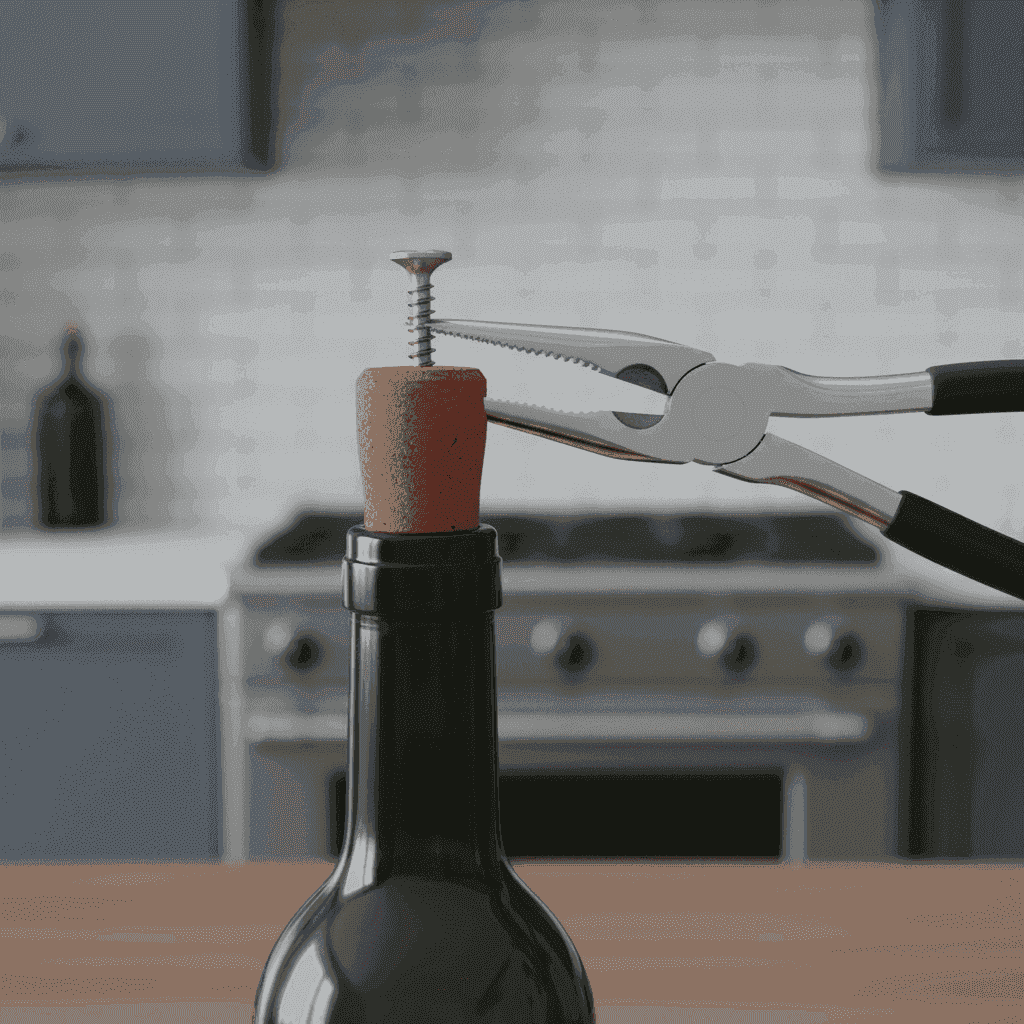
Yes, the screw-and-pliers method is highly effective for cork removal when a traditional corkscrew is unavailable, utilizing a common household screw and a pair of pliers. This technique works by giving you a 'handle' to pull the cork out, mimicking the action of a corkscrew worm.
Required Materials for This Technique
To use this method, you will need a long, coarse-threaded screw (like a wood screw) and a pair of pliers, a hammer with a claw, or even a sturdy fork. The screw should be long enough to penetrate most of the cork without going all the way through, and the pliers or claw are needed for leverage.
Step-by-Step Screw-and-Pliers Method
Successfully employing the screw-and-pliers method involves a few straightforward steps, utilizing common tools for effective cork extraction.
- Insert the Screw: Carefully twist the screw into the center of the cork, leaving about an inch (2-3 cm) exposed. Do not pierce through to the other side of the cork, as this could introduce cork bits into the wine.
- Grip the Screw: Securely grip the head of the screw with your pliers or the claw of a hammer.
- Pull Gently: Apply steady, upward pressure while wiggling the screw gently from side to side. The cork should begin to come out.
- Complete Removal: Continue pulling until the cork is fully extracted. For very stubborn corks, you might need to apply a bit more force, but always keep the bottle stable.
Using a Key or Serrated Knife Safely
A key or a small serrated knife can be used to slowly work the cork out of the bottle, but this method requires extreme caution to avoid injury and cork breakage. This is a more delicate and potentially risky approach, best reserved for situations where other tools are unavailable.
The Key Method Explained
The key method involves inserting a key at an angle into the cork and slowly twisting it around, creating enough friction to pull the cork upwards. Insert the key at a 45-degree angle, pushing it deep into the cork, then apply upward pressure while rotating the bottle or the key itself. It's a slow process that builds leverage.
Safety Tips for Using a Knife
When using a serrated knife, prioritize safety by using a small, sharp blade and never pointing it towards your body while carefully prying the cork. Insert the tip of the knife into the edge of the cork, working it around the circumference in a circular motion to loosen it, then gently pry it up. Always keep your hands clear of the blade and consider protecting them with a cloth.
Pushing the Cork In: When is it Advisable?
Pushing the cork into the bottle is advisable as a last resort when no extraction method is possible, allowing access to the wine despite potentially compromising its immediate quality. This method is quick but means the cork will float in the wine, and it might splash, so choose your moment wisely.

How to Safely Push the Cork In
To safely push the cork in, use a blunt, non-sharp object that fits the diameter of the cork, such as a wooden spoon handle or a marker, applying steady, firm pressure. Hold the bottle firmly on a stable surface, and with consistent force, push the cork straight down into the wine. Be prepared for a slight splash when it pops through.
Potential Downsides: Cork in Wine
The primary downside of pushing the cork in is that cork particles can break off and enter the wine, and the cork itself will remain submerged, potentially affecting the wine's immediate aesthetics. While harmless, cork fragments can be unpleasant to drink. Decanting into a proper wine glass immediately after opening can help separate any bits.
Comparing Cork Removal Methods
Different emergency cork removal methods vary significantly in their difficulty, required tools, and potential risks, making some more suitable for specific situations than others. Understanding these differences helps in choosing the best approach for your impromptu wine opening.
| Method | Difficulty | Tools Needed | Risk Level | Best For |
|---|---|---|---|---|
| Shoe Method | Medium | Sturdy shoe, sturdy wall | Low (bottle breakage) | Outdoor, travel, no tools |
| Screw & Pliers | Medium | Long screw, pliers/hammer claw | Medium (cork breakage) | Home, basic toolkit access |
| Key Method | High | Sturdy house key | Medium (cork breakage, time) | Minimalist situations |
| Serrated Knife | High | Small serrated knife | High (injury, cork breakage) | Absolute last resort, extreme caution |
| Pushing Cork In | Low | Blunt object (spoon handle) | Low (splash, cork fragments) | Quick access, don't mind cork in wine |
Essential Safety Precautions for DIY Cork Removal
When attempting any DIY cork removal, prioritizing safety is paramount to prevent injury to yourself and damage to the wine bottle. These methods involve considerable force or sharp objects, so careful handling is non-negotiable.
Protecting Your Hands and Eyes
Always protect your hands and eyes during makeshift cork removal, as broken glass or errant corks can cause serious injury. Consider wearing gloves for grip and eye protection, especially when applying force or using sharp tools. Keep your face clear of the bottle's opening.
Maintaining Bottle Integrity
Maintaining the bottle's integrity is crucial; avoid excessive force that could crack or shatter the glass. Support the bottle firmly, preferably on a stable surface, and apply pressure evenly. Glass bottles are designed for internal pressure, but external impacts or twisting forces can compromise their structure.
"Patience is a virtue, especially when faced with an unopened bottle and no corkscrew. Rushing any makeshift method significantly increases the risk of injury or ruining the wine. Take your time, assess your tools, and proceed with calm deliberation." – YAS Wine Expert, 2026
What if the Cork Breaks During Extraction?
If the cork breaks during extraction, the wine is still salvageable, but you'll need to filter out any fragments before enjoying it. A broken cork is a common occurrence, especially with older or poorly stored bottles, but it doesn't mean your wine is ruined.
Filtering Out Cork Fragments
To filter out cork fragments, pour the wine through a fine-mesh sieve, a coffee filter, or even a clean cheesecloth into another vessel. This ensures that your wine is free of any particulate matter, making for a more enjoyable tasting experience. After filtering, consider decanting it.
Dealing with a Crumbling Cork
When a cork crumbles, the best approach is often to gently push the remainder into the bottle rather than trying to extract tiny pieces. Once inside, filter the wine immediately to remove all the debris. This minimizes further damage and cork contamination.
Enjoying Your Wine: Post-Opening Tips
After successfully opening your wine without a corkscrew, taking a few extra steps can enhance your enjoyment, particularly by ensuring proper serving temperature and aeration. Your efforts deserve to be rewarded with a well-presented glass of wine.
Immediate Serving vs. Decanting
Decide between immediate serving or decanting based on the wine's type and age; younger, more robust reds or wines with cork bits often benefit from decanting. Decanting allows the wine to breathe, softening tannins and revealing complex aromas, particularly for certain grape varieties or those meant to be aged like fine wine. If you pushed the cork in, decanting is almost always recommended to separate the wine from the cork.
Pairing with Starters or Main Courses
Once open, consider pairing your wine with appropriate food, enhancing both the wine and the meal, whether it's best wine starters or a hearty main course. For example, a robust red opened via emergency methods might pair perfectly with a steak, following guides like how to choose red wine for steak.
Are There Any Wines Easier to Open Without a Corkscrew?
Yes, wines sealed with screw caps, synthetic corks, or those packaged in bag-in-box formats are significantly easier to open without a traditional corkscrew. These alternative closures eliminate the need for specialized tools entirely, making them ideal for casual consumption or situations where a corkscrew is unlikely to be present.
Screw Cap Wines
Screw cap wines are the easiest to open, requiring only a twist of the cap, making them perfect for picnics and travel. Many producers, even for high-quality unique wines, now use screw caps to prevent cork taint and ensure consistent quality, particularly for aromatic white grape varieties.
Synthetic Corks and Their Benefits
Synthetic corks offer easier removal than natural corks, as they maintain consistent elasticity and rarely break or crumble. While they still require a corkscrew, their consistent structure means they are less likely to pose an emergency opening challenge, making them more forgiving if you were to try a makeshift tool like a screw-and-pliers method.
Bag-in-Box Options
Bag-in-box wines are the ultimate convenience, featuring an integrated tap that dispenses wine without any cork or opening tool required. These formats are excellent for larger gatherings or extended casual enjoyment, and they represent a growing segment of the market for various everyday wine types and grape styles.