Decision table
Answer: Start with the table for fast direction, then refine using style and context sections below.
| Budget | Wine suggestion |
|---|---|
| $10 | Chilean Cabernet |
| $20 | Rioja Crianza |
| $50 | Champagne |
Beginner vs Enthusiast
Answer: Beginners should use stable benchmarks and repeatable pairings, while enthusiasts can optimize for producer style, vintage behavior, and serving precision.
Beginner path
Answer: Choose one anchor region and one anchor grape per scenario, then adjust one variable at a time.
Enthusiast path
Answer: Expand into producer comparisons, micro-region differences, and maturity windows after baseline is stable.
Core framework
Answer: The framework below translates abstract wine knowledge into practical choices for buying, pairing, and planning.
Consistency beats complexity: one clear framework used often outperforms random recommendations.
Style Baseline
Answer: In wine buying guide: how to choose a good bottle, style baseline is a decision layer rather than a standalone rule. Start with context, then narrow by structure and flavor. Compare one conservative option and one exploratory option, and record the result. This keeps decisions repeatable and reduces random variation from label design or score bias. Over time, this process creates a practical personal framework you can apply quickly in stores, restaurants, and winery visits while still improving precision with each iteration.
Intensity Matching
Answer: In wine buying guide: how to choose a good bottle, intensity matching is a decision layer rather than a standalone rule. Start with context, then narrow by structure and flavor. Compare one conservative option and one exploratory option, and record the result. This keeps decisions repeatable and reduces random variation from label design or score bias. Over time, this process creates a practical personal framework you can apply quickly in stores, restaurants, and winery visits while still improving precision with each iteration.
Acid Balance
Answer: In wine buying guide: how to choose a good bottle, acid balance is a decision layer rather than a standalone rule. Start with context, then narrow by structure and flavor. Compare one conservative option and one exploratory option, and record the result. This keeps decisions repeatable and reduces random variation from label design or score bias. Over time, this process creates a practical personal framework you can apply quickly in stores, restaurants, and winery visits while still improving precision with each iteration.
Texture And Body
Answer: In wine buying guide: how to choose a good bottle, texture and body is a decision layer rather than a standalone rule. Start with context, then narrow by structure and flavor. Compare one conservative option and one exploratory option, and record the result. This keeps decisions repeatable and reduces random variation from label design or score bias. Over time, this process creates a practical personal framework you can apply quickly in stores, restaurants, and winery visits while still improving precision with each iteration.
Sauce-First Decisions
Answer: In wine buying guide: how to choose a good bottle, sauce-first decisions is a decision layer rather than a standalone rule. Start with context, then narrow by structure and flavor. Compare one conservative option and one exploratory option, and record the result. This keeps decisions repeatable and reduces random variation from label design or score bias. Over time, this process creates a practical personal framework you can apply quickly in stores, restaurants, and winery visits while still improving precision with each iteration.
Temperature Control
Answer: In wine buying guide: how to choose a good bottle, temperature control is a decision layer rather than a standalone rule. Start with context, then narrow by structure and flavor. Compare one conservative option and one exploratory option, and record the result. This keeps decisions repeatable and reduces random variation from label design or score bias. Over time, this process creates a practical personal framework you can apply quickly in stores, restaurants, and winery visits while still improving precision with each iteration.
Glassware Effect
Answer: In wine buying guide: how to choose a good bottle, glassware effect is a decision layer rather than a standalone rule. Start with context, then narrow by structure and flavor. Compare one conservative option and one exploratory option, and record the result. This keeps decisions repeatable and reduces random variation from label design or score bias. Over time, this process creates a practical personal framework you can apply quickly in stores, restaurants, and winery visits while still improving precision with each iteration.
Region Signal
Answer: In wine buying guide: how to choose a good bottle, region signal is a decision layer rather than a standalone rule. Start with context, then narrow by structure and flavor. Compare one conservative option and one exploratory option, and record the result. This keeps decisions repeatable and reduces random variation from label design or score bias. Over time, this process creates a practical personal framework you can apply quickly in stores, restaurants, and winery visits while still improving precision with each iteration.
Grape Signal
Answer: In wine buying guide: how to choose a good bottle, grape signal is a decision layer rather than a standalone rule. Start with context, then narrow by structure and flavor. Compare one conservative option and one exploratory option, and record the result. This keeps decisions repeatable and reduces random variation from label design or score bias. Over time, this process creates a practical personal framework you can apply quickly in stores, restaurants, and winery visits while still improving precision with each iteration.
Producer Signal
Answer: In wine buying guide: how to choose a good bottle, producer signal is a decision layer rather than a standalone rule. Start with context, then narrow by structure and flavor. Compare one conservative option and one exploratory option, and record the result. This keeps decisions repeatable and reduces random variation from label design or score bias. Over time, this process creates a practical personal framework you can apply quickly in stores, restaurants, and winery visits while still improving precision with each iteration.
Budget Planning
Answer: In wine buying guide: how to choose a good bottle, budget planning is a decision layer rather than a standalone rule. Start with context, then narrow by structure and flavor. Compare one conservative option and one exploratory option, and record the result. This keeps decisions repeatable and reduces random variation from label design or score bias. Over time, this process creates a practical personal framework you can apply quickly in stores, restaurants, and winery visits while still improving precision with each iteration.
Menu Sequencing
Answer: In wine buying guide: how to choose a good bottle, menu sequencing is a decision layer rather than a standalone rule. Start with context, then narrow by structure and flavor. Compare one conservative option and one exploratory option, and record the result. This keeps decisions repeatable and reduces random variation from label design or score bias. Over time, this process creates a practical personal framework you can apply quickly in stores, restaurants, and winery visits while still improving precision with each iteration.
Step-by-step workflow
Answer: Follow this ordered flow each time you choose wine to keep outcomes predictable.
- Define meal or occasion.
- Choose style intensity and acidity target.
- Select region and grape shortlist.
- Pick producer and budget band.
- Adjust serving temperature and glassware.
Practical examples
Answer: These examples show how to apply the framework in real situations without overcomplicating decisions.
Check region
Answer: Region defines likely style and quality baseline.
Check vintage
Answer: Vintage matters most in climate-sensitive and age-worthy styles.
Check producer
Answer: Producer consistency reduces downside risk.
Common mistakes
Answer: Most errors happen when one variable dominates the decision and context is ignored.
- Ignoring context.
- Skipping style-intensity match.
- Not recording results for repeatability.
Related guides
Answer: Use the links below to move from this topic into grapes, countries, pairings, and buying decisions.
Grape pages
Country pages
Pairing pages
Buying guide
Scenario deep dive
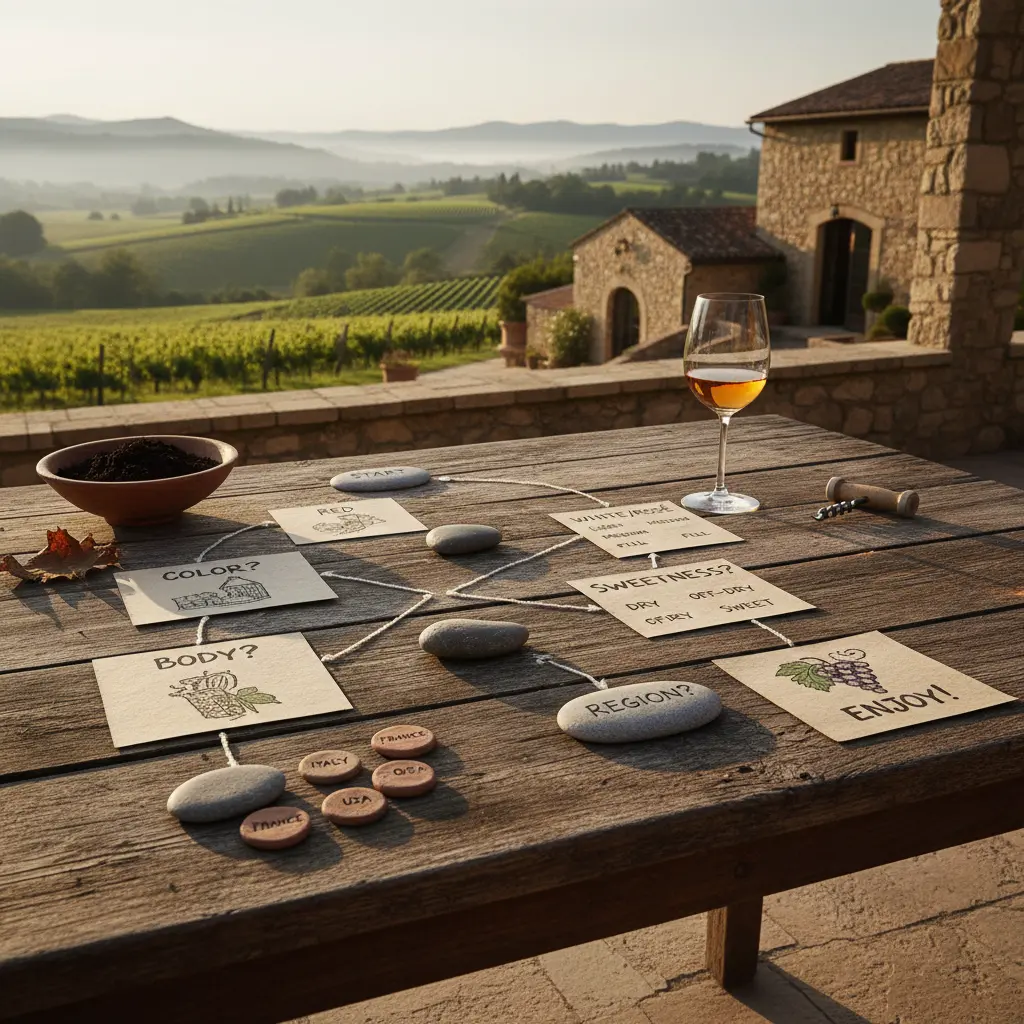
Answer: Use scenario-based planning to convert generic advice into repeatable decisions across different meal types, budgets, and service contexts.
Family dinners
Answer: Prioritize compatibility and reliability over novelty. Pick wines with moderate alcohol, clear fruit, and balanced acidity so the bottle works for multiple dishes and mixed preferences at the table. This reduces mismatch risk and helps new drinkers build confidence without overthinking label complexity.
Restaurant ordering
Answer: Anchor your choice on sauce and cooking method first, then confirm style by region and grape. Ask one focused question about producer style or oak handling. That single step usually improves outcomes more than chasing prestige labels or unfamiliar bottle names.
Seasonal menus
Answer: Shift wine structure with seasonality: fresher high-acid profiles for warm periods and more layered, textured styles for colder periods. The goal is not strict rules, but preserving balance between dish weight, aromatic intensity, and finish length.
Entertaining guests
Answer: Build a two-bottle strategy: one safe classic and one exploratory option. Serve in proper sequence from lighter to fuller style. This keeps guests comfortable while still giving a point of comparison that makes tasting conversation useful and memorable.
Budget control
Answer: Create fixed budget lanes and assign style targets to each lane. Evaluate bottles by consistency, not hype. Over time, this method identifies reliable producers and regions that deliver stronger value and predictable quality in your preferred style profile.
Progress tracking
Answer: Keep short notes after each use: dish, wine, serving temperature, and result. These notes quickly become your highest-value dataset for future decisions and make each new purchase or pairing significantly easier and faster.
Comparison loop
Answer: Compare two wines in the same scenario and identify which variable drove the result: acidity, tannin, oak, body, or alcohol. This comparison loop improves decision speed and reduces repeat mistakes.
Execution checklist
Answer: Confirm serving temperature, glass cleanliness, and opening timing before evaluation. Small execution details can shift perception enough to change the final pairing or buying decision.
Answer: Final check: verify context, intensity, structure, and serving details before locking the decision. This short check consistently improves outcomes and keeps the framework practical.
Answer: Consistent execution over multiple sessions is what turns guidance into skill. Repetition with notes improves accuracy faster than one-off experiments.
Answer: Keep the process simple and repeatable, then tune one variable at a time for better precision.
Next steps
Answer: Apply this framework in two real scenarios this week and compare outcomes using your own notes.