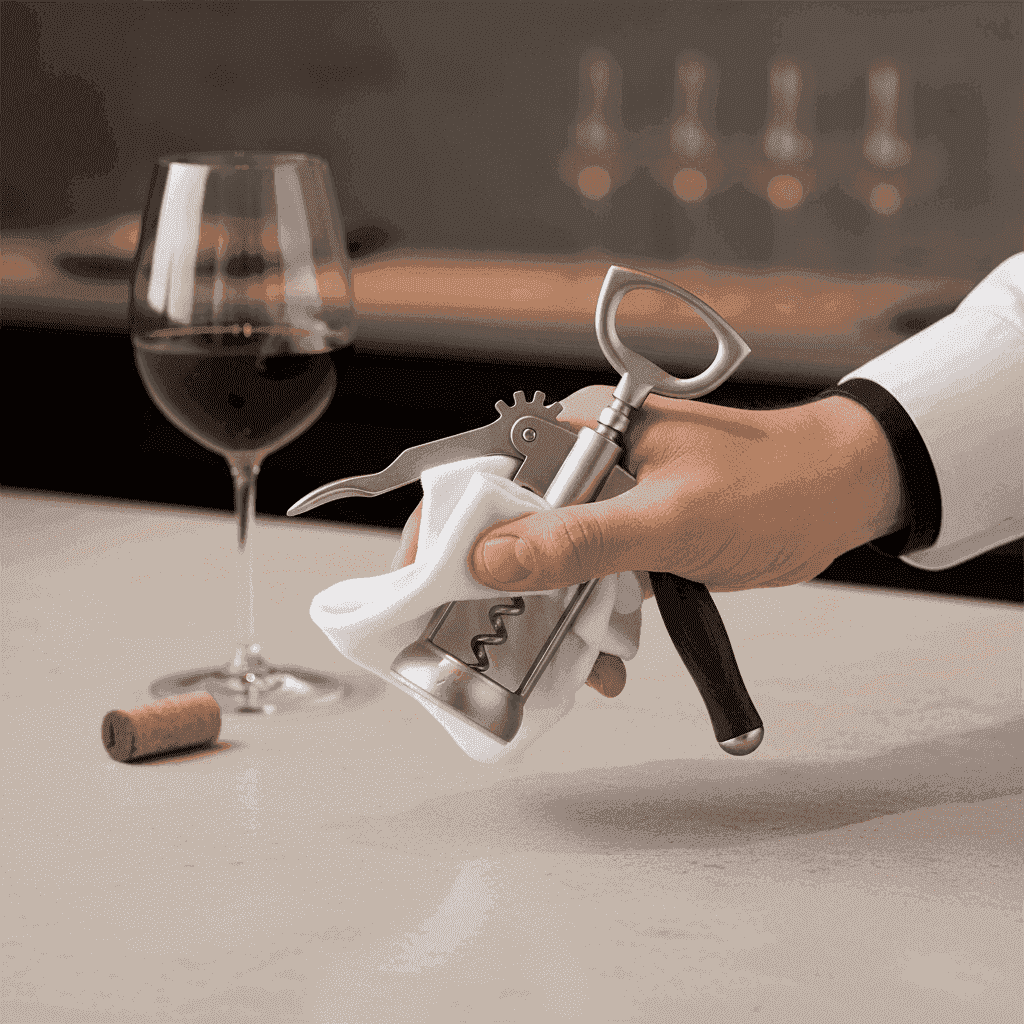
What are the main types of wine openers available in 2026?
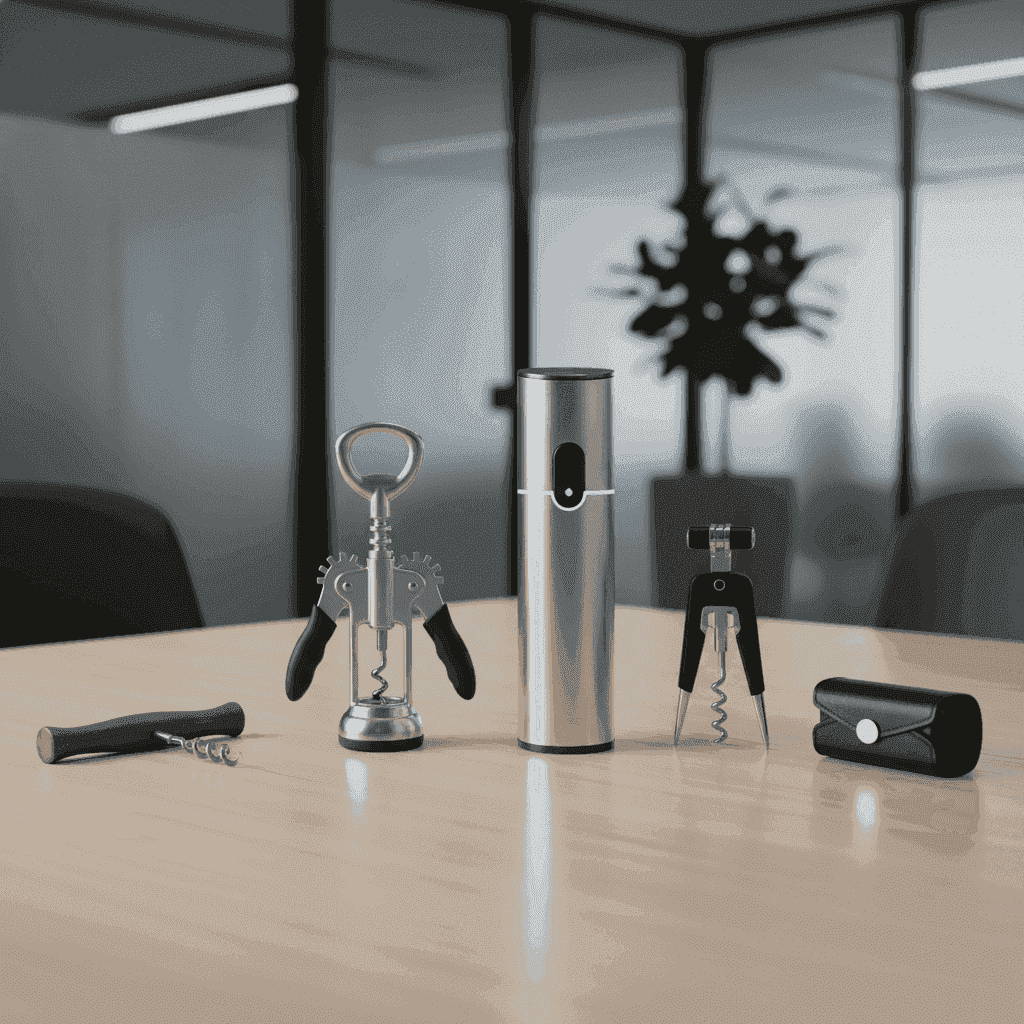
The primary types of wine openers include waiter's corkscrews, winged corkscrews, lever-style (rabbit) openers, electric openers, and the specialized Ah-So (two-prong) opener. Each offers a distinct mechanism for removing corks, catering to different preferences and situations.
The Classic Waiter's Corkscrew
The waiter's corkscrew is a compact, versatile tool favored by professionals for its efficiency and portability. It combines a corkscrew, a lever (usually a two-step hinge), and a small knife for cutting foil, making it an all-in-one solution for opening wine bottles.
The Winged Corkscrew
The winged corkscrew simplifies uncorking by using two levers that rise as the worm penetrates the cork. Users push down these 'wings' to effortlessly extract the cork, making it a popular choice for home use due to its intuitive design.
Lever (Rabbit) Corkscrews
Lever-style corkscrews, often called 'rabbit' openers, provide a fast and powerful way to remove corks with minimal effort. Their robust design uses a large lever mechanism to drive the worm into the cork and then pull it out in one fluid motion, ideal for frequent use or those with limited hand strength.
Electric Wine Openers
Electric wine openers offer ultimate convenience, removing corks at the touch of a button. These battery-operated devices are perfect for those seeking an effortless, hands-free experience, automatically drilling into and extracting the cork.
Ah-So (Two-Prong) Wine Openers
The Ah-So, or two-prong opener, is specifically designed for delicate, aged, or synthetic corks without piercing them. It works by sliding two thin metal prongs down either side of the cork, gently gripping it for extraction, preserving the cork's integrity, especially important for older bottles as discussed in our guide on Aged Like Fine Wine.
How to use a Waiter's Corkscrew like a Sommelier?
Using a waiter's corkscrew like a sommelier involves a precise, smooth technique that prioritizes cork integrity and elegance. This method ensures a clean opening every time, a crucial step before you even consider how to wine taste like a sommelier.
Step 1: Cutting the Foil
To properly cut the foil, use the knife blade to create a clean, circular incision just below the bottle's lip. This ensures the foil is removed neatly without tearing, a crucial first step for any bottle.
- Position the knife blade just below the lip of the bottle. The knife should be on the lower band of the bottle neck, not directly on the cork.
- Rotate the bottle (or the opener) smoothly around, making a clean circular cut. Ensure a complete revolution to sever the foil cleanly.
- Make a small vertical cut from the horizontal line up to the top of the foil. This allows for easy removal of the foil cap.
- Peel off the foil cap and discard it. Wipe the bottle neck if any residue remains.
Step 2: Inserting the Worm
Center the tip of the worm (the spiral part) directly over the cork's center. Slowly twist the corkscrew downwards, ensuring the worm penetrates the cork straight and vertically, without angling.
Step 3: Leveraging the Cork
Once the worm is nearly fully inserted (leaving one curl visible), place the first notch of the opener's lever firmly on the bottle's lip. Use this leverage point to gently pull the handle upwards, lifting the cork partially out.
Step 4: Extracting the Cork
Reposition the opener, placing the second (lower) notch of the lever onto the bottle's lip. Continue to pull the handle upwards, slowly and steadily, until the cork is almost fully extracted. Finish by gently twisting and pulling the cork out by hand to prevent a 'pop' and maintain control.
Mastering the Winged and Lever Corkscrews
Winged and lever corkscrews simplify the uncorking process with their mechanical advantage, making them accessible to a broader audience. While different in design, both aim for user-friendly operation.
Using a Winged Corkscrew
To use a winged corkscrew, center the worm on the cork and twist the top handle clockwise. As the worm descends, the two 'wings' will rise. Once fully extended, firmly press both wings down simultaneously to lift the cork out of the bottle.
Operating a Lever (Rabbit) Corkscrew
Operating a lever corkscrew involves clamping it securely onto the bottle neck, lowering the lever to insert the worm, and then raising the lever to extract the cork. The 'rabbit ears' grip the bottle, providing stability, while the single lever does the heavy lifting, making it incredibly efficient.
Are Electric Wine Openers worth it for home use?
Electric wine openers are often worth it for home use due to their unparalleled ease of use and consistent performance, especially for those seeking convenience. They eliminate physical effort, making them ideal for entertaining guests or for individuals with dexterity challenges.
Benefits of Electric Openers
The primary benefits of electric openers include their one-button operation, sleek design, and ability to remove corks quickly without any struggle. Many models also come with built-in foil cutters and charging bases, simplifying the entire process from start to finish.
Drawbacks and Considerations
Despite their advantages, electric openers require charging and may not be suitable for all cork types (e.g., extremely fragile vintage corks). Their reliance on battery power means they can be unusable if not charged, unlike manual options, which are always ready. When considering an electric opener as a wine gift, assess the recipient's typical wine consumption and preference for technology.
"A truly exceptional wine experience begins not just with the pour, but with the perfect uncorking. The right tool transforms a task into a ritual."
— YAS Wine Sommelier, 2026
When should you use an Ah-So (Two-Prong) Opener?
You should primarily use an Ah-So (two-prong) opener when dealing with older, fragile corks or synthetic corks that might crumble with a traditional corkscrew. Its design prevents cork perforation, minimizing the risk of breakage and cork fragments in your wine.
Ideal for Fragile or Vintage Corks
The Ah-So is ideal for opening vintage bottles where corks may have dried out and become brittle over time. By embracing the cork rather than puncturing it, it preserves the cork's integrity, which is crucial for valuable or sentimental wines.
Technique for the Ah-So
The technique for using an Ah-So involves gently rocking and inserting the longer prong first, then the shorter prong, between the cork and the bottle neck. Once both prongs are fully inserted, twist and pull upwards while gently rotating the opener to extract the cork smoothly.
How to Troubleshoot Common Wine Opening Problems?
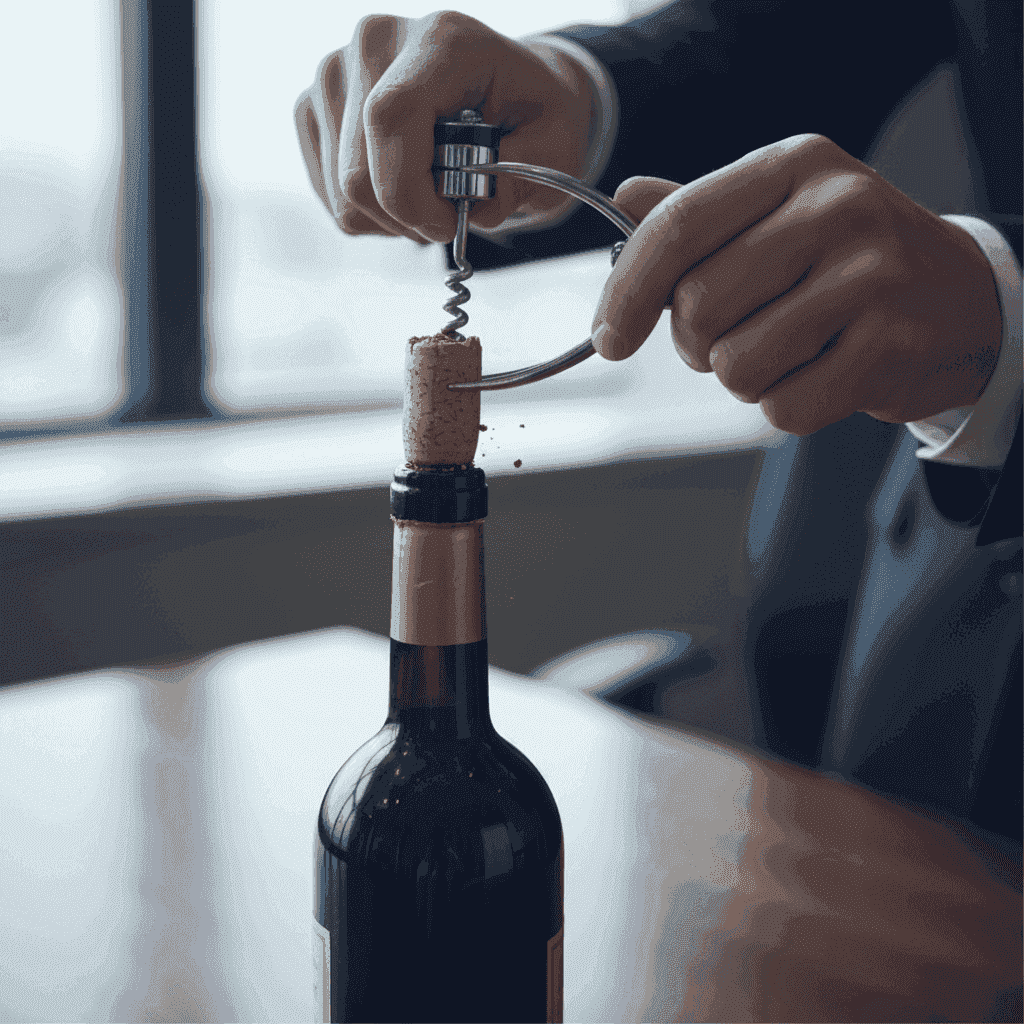
Common wine opening problems like broken corks or stuck corks can often be resolved with specific techniques and the right tools. Preparation and patience are key to successfully overcoming these challenges.
Broken Corks
If a cork breaks, the best approach is to carefully reinsert the corkscrew at an angle into the remaining cork piece and try to extract it again. If it crumbles, consider pushing the remaining cork into the bottle, then straining the wine through a fine mesh sieve or cheesecloth to remove any fragments. If all else fails, refer to our guide on how to open wine without a corkscrew.
Stuck Corks
Stuck corks can often be freed by gently warming the bottle neck with your hands or by dipping it briefly in warm water to expand the glass slightly. This can loosen the cork's grip, making it easier to extract with your chosen opener.
Cork Fragments in Wine
To remove cork fragments, decant the wine into another vessel, pouring it through a fine-mesh sieve, cheesecloth, or even a coffee filter. This ensures your wine is free from debris and ready for enjoyment in a properly chosen red wine glass.
Essential Tips for Choosing Your Next Wine Opener
Choosing your next wine opener requires considering your usage frequency, preferred ease of use, and specific wine collection needs. The ideal opener balances functionality with personal comfort and aesthetics.
Consider Your Usage Frequency
If you open wine frequently, invest in a durable and efficient opener like a high-quality lever corkscrew or a reliable electric model. For occasional use, a classic waiter's corkscrew offers excellent value and versatility.
Ergonomics and Build Quality
Prioritize openers with good ergonomics and sturdy build quality, especially for manual models. A comfortable grip and robust materials ensure longevity and a smoother uncorking experience, preventing strain on your hands.
Budget-Friendly vs. Premium Options
While budget-friendly options can suffice, premium openers often feature better materials, smoother mechanisms, and increased durability. Decide if the added investment in a premium opener is justified by your usage patterns and desire for a refined experience.
What are the best practices for wine opener maintenance?
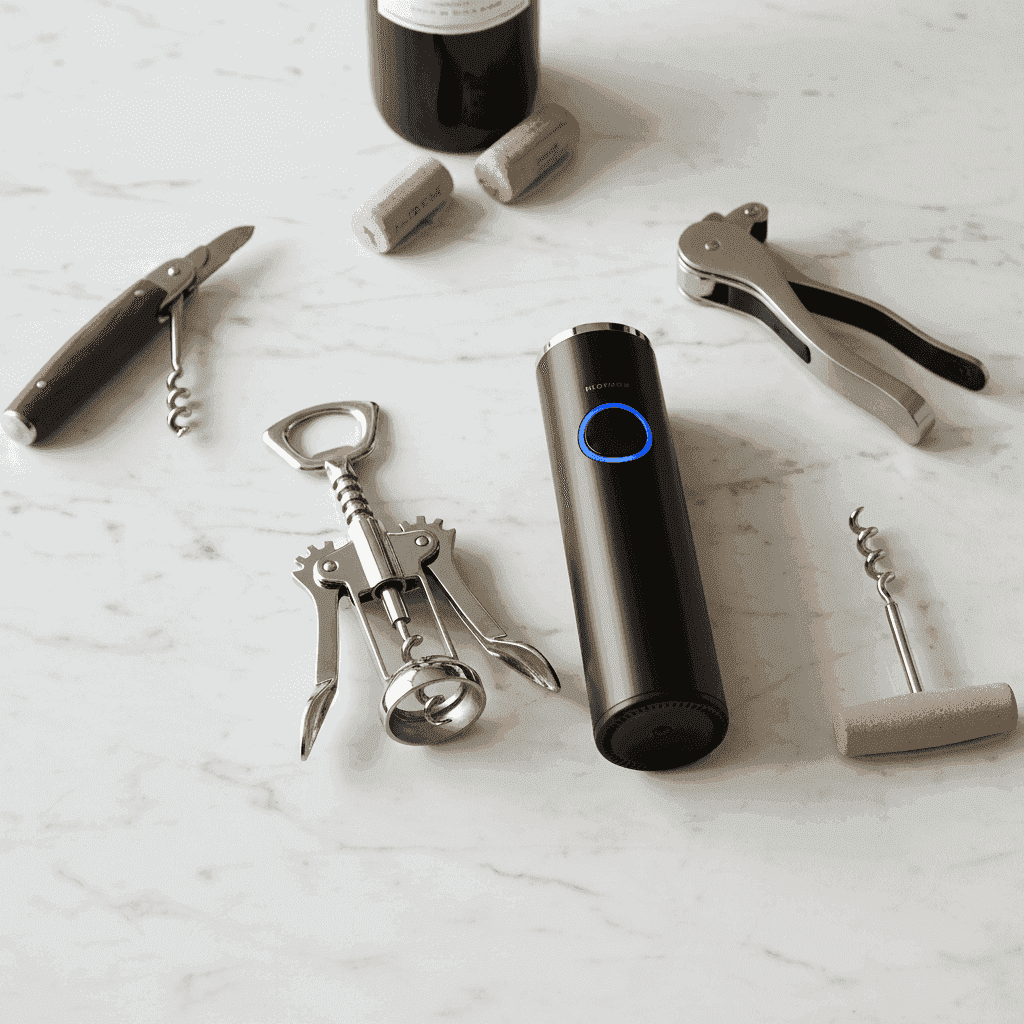
Proper maintenance of your wine opener extends its lifespan and ensures it performs optimally for every bottle. Regular cleaning and appropriate storage are key to keeping your tools in top condition.
Cleaning Your Corkscrew
After each use, wipe down the corkscrew's worm with a damp cloth to remove any cork residue or wine stains. For more thorough cleaning, a mild soap and water solution can be used, ensuring it's completely dry before storage to prevent rust.
Storing Your Opener
Store your wine opener in a dry place, away from excessive moisture, to prevent rust and damage to its components. Many openers come with their own cases or stands, which are ideal for protection and organization.
Replacing Worn Parts
Inspect your opener periodically for worn-out parts, such as dull foil cutters or bent worms, and replace them if necessary. Some high-end lever models offer replaceable worms, allowing for continuous optimal performance without needing to purchase an entirely new unit.
| Opener Type | Pros | Cons | Best For |
|---|---|---|---|
| Waiter's Corkscrew | Compact, portable, versatile, precise. | Requires technique, can be difficult for beginners. | Professionals, frequent travelers, everyday use once mastered. |
| Winged Corkscrew | Easy to use, good leverage. | Bulky, less precise for fragile corks. | Casual home use, beginners. |
| Lever (Rabbit) Opener | Fast, effortless, excellent leverage. | Bulky, often more expensive, can be aggressive with fragile corks. | Frequent use, entertaining, gifts. |
| Electric Opener | Effortless, automatic, sleek design. | Requires charging, less suitable for fragile corks, can be bulky. | Convenience, those with dexterity issues, modern kitchens. |
| Ah-So (Two-Prong) | Preserves old/fragile corks, no piercing. | Requires specific technique, slower operation. | Vintage wines, fragile corks, collectors. |