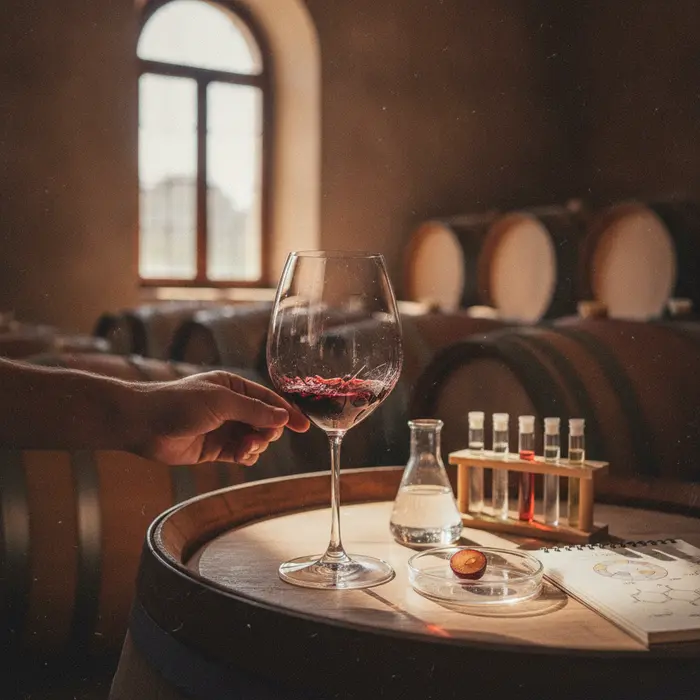
How does wine tasting science disrupt traditional tasting norms?
The traditional wine tasting paradigm relies heavily on subjective vocabulary that often alienates the everyday consumer. Transitioning to a scientific method allows tasters to identify specific physical reactions and chemical compounds, creating a transparent, democratic evaluation system.
Moving beyond subjective wine reviews
Standard wine reviews often feature flowery descriptors that depend entirely on the individual critic's environment and palate. By shifting the focus to objective structural components such as pH, acidity levels, and concentration of volatile molecules, we create a standardized language for tasting.
Understanding volatile organic compounds (VOCs)
Volatile organic compounds, or VOCs, are the lightweight chemical molecules that easily evaporate from the surface of the wine. When these compounds travel through the air, they bind to your olfactory receptors, translating directly into familiar scent associations like leather, stone fruit, or tobacco.
How glass shape alters chemical release
The physical design of your glassware determines how fast these volatile compounds escape and how densely they concentrate near the rim. Investing in the best wine glasses directly influences your ability to perceive subtle floral and mineral elements instead of raw alcohol vapors.
What is the chemical breakdown of wine aromatics?
A wine's aromatic profile is not a mystery, but rather a direct consequence of organic compounds produced during grape growth, fermentation, and aging. Identifying these molecular groups removes the guesswork from describing what is in your glass.
Pyrazines and green bell pepper notes
Methoxypyrazines are the specific compounds that give grapes like Cabernet Sauvignon, Sauvignon Blanc, and Cabernet Franc their distinct green bell pepper or grassy aromas. These compounds are incredibly potent, and the human nose can detect them even at extremely low thresholds of parts per trillion.
Terpenes and floral expressions
Terpenes are naturally occurring hydrocarbons found in the skins of aromatic grapes like Riesling, Gewurztraminer, and Muscat. Compounds such as linalool and geraniol are chemically identical to the molecules found in lavender and white roses, explaining why these wines exhibit intense floral characters.
Esters and primary fruit notes
Esters are aromatic compounds formed through the chemical reaction of organic acids and alcohol during the fermentation process. Yeast strains play a major role in ester production, which is why winemakers select specific yeasts to amplify aromas like fresh apple, pear, or banana.
| Chemical Compound | Aroma Character | Primary Grape Source |
|---|---|---|
| Methoxypyrazines | Bell pepper, green grass, herbal | Sauvignon Blanc, Cabernet Franc |
| Linalool (Terpene) | Lavender, orange blossom, sweet citrus | Riesling, Gewurztraminer |
| Rotundone (Sesquiterpene) | Black pepper, crushed peppercorn | Syrah, Gruner Veltliner |
| Isoamyl Acetate (Ester) | Banana, sweet yellow pear | Gamay, young white wines |
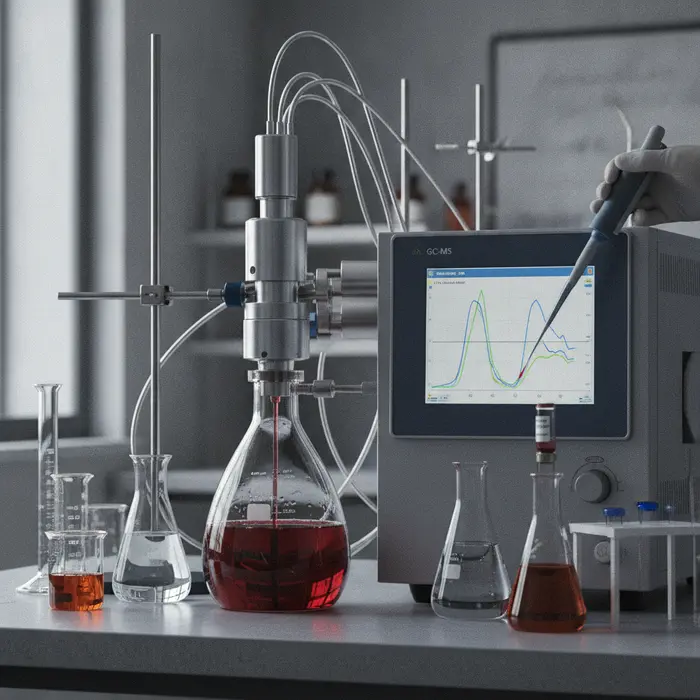
Why does retro-nasal olfaction change your perception?
Retro-nasal breathing is the physical mechanism that connects the back of your mouth to your nasal cavity, transforming basic taste sensations into complex flavor experiences. Understanding this physiological pathway allows you to experience the full spectrum of a wine's profile.
The pathway from throat to nasal cavity
When you swirl, sip, and aerate wine inside your mouth, your body heat vaporizes the liquid's volatile compounds. As you swallow, small currents of air push these vapors up behind your palate to the olfactory receptors, unlocking hidden nuances that simple sniffing misses.
Distinguishing taste from aroma
Your tongue is chemically limited to sensing only five basic tastes: sweetness, sourness, bitterness, saltiness, and umami. The entire spectrum of fruit, oak, spice, and mineral notes is registered entirely via retro-nasal smelling rather than on the taste buds themselves.
Enhancing the long finish of structural wines
High-quality structural wines, such as a premium Nebbiolo from Barolo, contain complex matrices of tannins and acids that release aroma compounds slowly. Retro-nasal breathing captures this slow vaporization, creating the persistent sensation known as a wine's finish.
How does glass geometry manipulate liquid chemistry?
Glassware is a highly engineered tool designed to maximize the evaporation and presentation of a wine's unique chemical makeup. Altering the dimensions of the glass physically changes how the wine behaves when exposed to air.
Bowl surface area and aeration dynamics
A broad bowl increases the contact area between the wine and oxygen, which accelerates the release of heavy aromatic compounds. This structural exposure is particularly critical for young, high-tannin reds that need immediate aeration to unpack their tight flavors.
Rim diameter and taste bud delivery
The width of the rim determines the angle at which you tilt your head and how the liquid flows across your palate. When you learn how to choose the perfect red wine glass, you are directly selecting where the wine lands on your tongue to highlight fruit or temper acidity.
Choosing glassware based on grape phenols
Wines with thin skins and high acidity require delicate glass shapes that direct aromas upward without emphasizing alcohol. Conversely, thick-skinned grapes containing high levels of wood lactones or tannins benefit from a wider chimney that allows volatile alcohol to diffuse safely away from your eyes and nose.
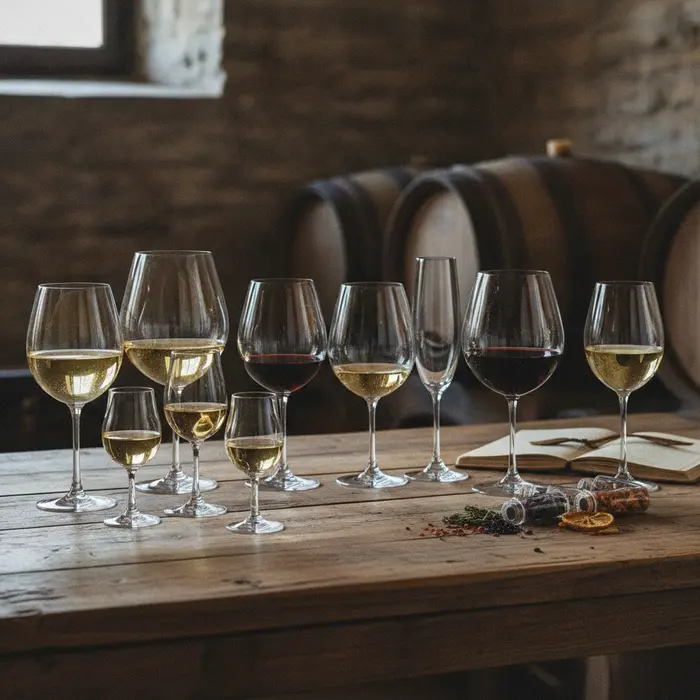
Is wine aging purely chemical or subjective?
The aging of fine wine is a highly systematic process governed by organic chemistry, rather than an unpredictable mystery. Specific chemical parameters determine whether a wine will evolve gracefully or simply decay over time.
Tannin polymerization and softening
As a wine rests in a cellar, short tannin molecules bind together in long chains, a chemical process called polymerization. These larger structures feel smoother on the tongue and eventually become heavy enough to precipitate out as physical sediment, leaving the liquid silky.
Slow oxidation in oak versus bottle
Oak aging introduces trace amounts of oxygen through microscopic wood pores, stabilizing color and introducing sweet wood lactones. Once the wine is bottled under cork or screw cap, the environment becomes anaerobic, shifting the aging process into a slow, reductive state.
Spotting age-worthy chemical structures
To successfully develop secondary notes, a bottle must start with high levels of natural acidity, low pH, and dense phenolic compounds. Understanding these scientific requirements helps you identify which bottles are truly meant to be aged like a fine wine, avoiding the disappointment of a spoiled cellar. For more on the cultural misconceptions of cellaring, read about how this meme aged like fine wine.
Practical guide to organizing a scientific blind tasting
A scientific blind tasting is the single best way to eliminate brand bias and focus strictly on the chemical properties of the wine in front of you. By standardizing environmental variables, you allow your sensory receptors to make objective judgments.
Setting up the flight variables
To run an accurate sensory experiment, you must eliminate all visual cues and establish a standardized pouring method. Follow this step-by-step process to set up a blind tasting flight for your guests:
- Wrap all selected bottles in identical black sleeves or foil to obscure label artwork.
- Use matching, standardized glasses for every single pour to maintain uniform aeration rates.
- Keep tasting portions limited to exactly two ounces to allow consistent glass swirling.
- Provide neutral crackers and room-temperature water to cleanse the palate between flights.
Eliminating bias through temperature control
Temperature directly controls the rate of chemical evaporation, so serving wines at improper temperatures ruins the experiment. Ensure all dry white flights are served between 10 and 12 degrees Celsius, while red flights should remain at 16 to 18 degrees Celsius to prevent volatile suppression.
Evaluating color density and light refraction
Analyzing color depth and rim variation under a bright white light reveals vital chemical clues about a wine's age and origin. A wide, orange-tinted rim points to advanced oxidation and tannin polymerization, while a tight magenta border indicates a young, high-acid vintage.
"Science does not strip the mystery from wine; it explains why our senses respond so passionately to a fermented grape. By understanding pH, tannins, and volatile esters, we become deliberate tasters rather than passive consumers."
How do chemical compounds alter food and wine pairings?
The concept of food and wine pairing is a series of chemical reactions taking place on your palate. Analyzing the pH, fats, and proteins of your dish lets you predict how they will interact with the acids and tannins in your glass.
Tannins binding with meat proteins
Tannins have a natural affinity for salivary proteins, which is why high-tannin wines make your mouth feel dry. When paired with high-protein foods like steak, the tannins bind to the meat proteins instead of your saliva, softening the wine and cleansing the palate.
Acid cutting through heavy fats
Organic acids in wine work similarly to citrus juice by breaking down and cutting through heavy lipids on your tongue. For example, when choosing the best wine with turkey, selecting a high-acid white or light red keeps the savory gravy from overwhelming your taste buds.
High alcohol amplifying spicy heat
Capsaicin, the active compound in spicy peppers, is highly soluble in alcohol but is aggravated by its burning properties. Pairing a high-alcohol Shiraz with spicy food will intensify the heat, whereas a low-alcohol, slightly sweet Riesling will neutralize the burn.
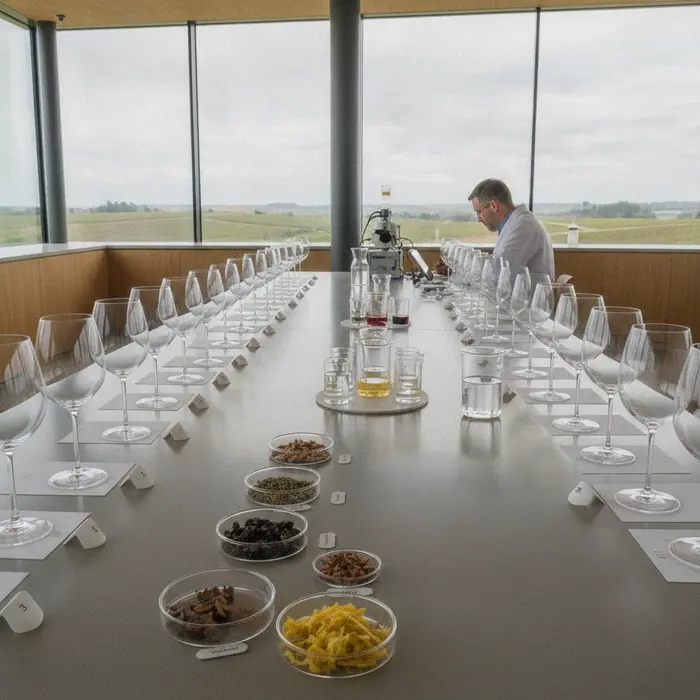
Debunking historic wine myths with laboratory evidence
Modern analytical laboratory tools have systematically disproven some of the wine industry's most persistent myths. Replacing these ancient beliefs with scientific realities helps consumers make better purchasing and cellar management decisions.
Debunking the sulfur headache myth
Sulfites are frequently blamed for post-tasting headaches, yet chemical tests prove that dried fruits and processed meats contain significantly higher sulfite counts than a bottle of red. Most wine-related headaches are actually triggered by biogenic amines, high histamine levels, or basic dehydration.
Re-evaluating the legs or tears of a wine
The columns of liquid dripping down the inside of a swirled glass are not indicators of superior craftsmanship. Known in physics as the Marangoni effect, this phenomenon is caused entirely by surface tension gradients between water and evaporating alcohol.
Smart tools for optimal bottle preservation
The classic vacuum pump fails to preserve open wine because it cannot extract all oxygen, leaving behind enough molecules to continue oxidation. Utilizing advanced argon gas preservation tools prevents chemical deterioration by blanketing the wine with a heavy, inert protective barrier.