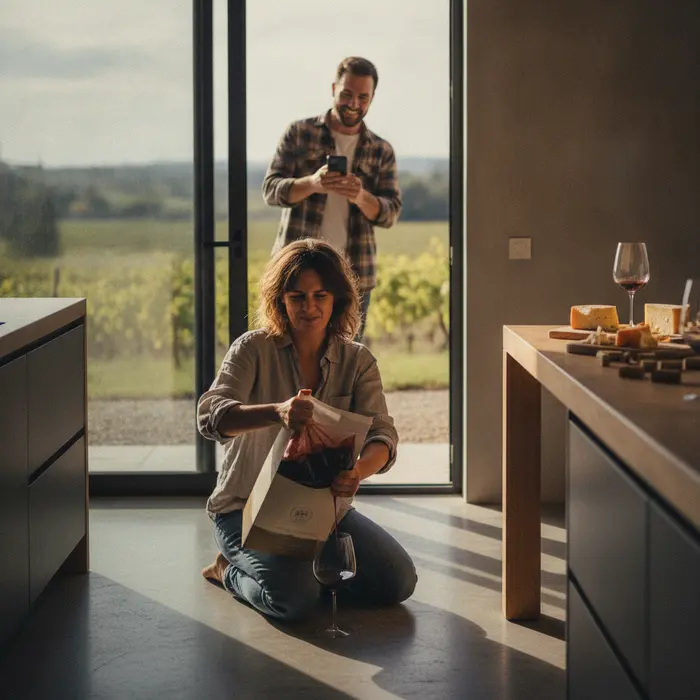
What is the viral Accidental Renaissance wine box photo?
The viral photo features a woman in a dimly lit kitchen holding up a silver wine bladder, tilting her head back to catch the final drops, while dramatic lighting mimics a classic Italian oil painting. This candid image took online communities by storm because it elevates a highly relatable, everyday struggle into a work of classic art.
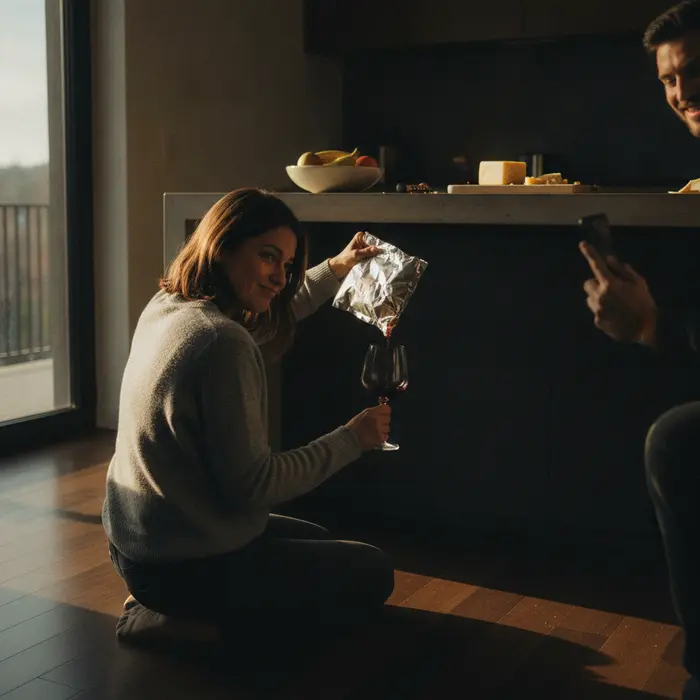
The viral meme explained
The image portrays a domestic scene using high-contrast lighting to elevate a mundane kitchen chore into high drama. Much like a classic meme that aged like wine, this photo resonates because it captures the shared human instinct to not let good wine go to waste.
Why the chiaroscuro lighting captured wine lovers
Chiaroscuro is an artistic technique using strong contrasts between light and dark to give subjects a three-dimensional quality. The harsh overhead refrigerator light combined with the soft glow of the kitchen created a Caravaggio-esque scene that instantly charmed social media users.
The cultural validation of boxed wine drinkers
Seeing a highly aestheticized representation of box-wine extraction validates the millions of wine drinkers who choose this format for value and convenience. It signals a shift from treating boxed wine as a low-brow secret to viewing it as a practical option worthy of being gifted, featured in guides like thoughtful wine gifts for her, or openly displayed on countertops.
Why do people squeeze the bladder of a wine box?
People squeeze the inner bladder of boxed wine because the internal gravity spout leaves behind up to a full glass of wine when kept inside the cardboard box. Squeezing is the only physical way to bypass the packaging geometry and empty the container completely.
Gravity, plastic folds, and the final half-glass
The plastic collar around the dispenser tap sits slightly higher than the bottom folds of the inner foil bladder. This design creates small pockets where liquids collect, trapping a small portion of wine that gravity alone cannot push out through the nozzle.
Removing the cardboard barrier
Slipping the foil bag out of its cardboard sleeve allows you to manipulate the bag directly, squeezing the remaining liquid toward the plastic valve. Removing the cardboard outer layer is a standard method for accessing the hidden corners of the packaging.
Maximizing your wine value
Wasting a portion of wine is frustrating, regardless of whether you are finishing a standard 750ml bottle or a 3-liter box. Emptying the bladder completely ensures you receive the full volume you purchased, making it a key habit for anyone focused on smart wine buying and waste reduction.
How does bag-in-box wine technology preserve wine?
Bag-in-box technology protects wine from air exposure by utilizing a collapsing plastic bladder that prevents oxygen from entering the container when pouring. This vacuum-sealed environment keeps the remaining wine fresh for up to six weeks after opening.
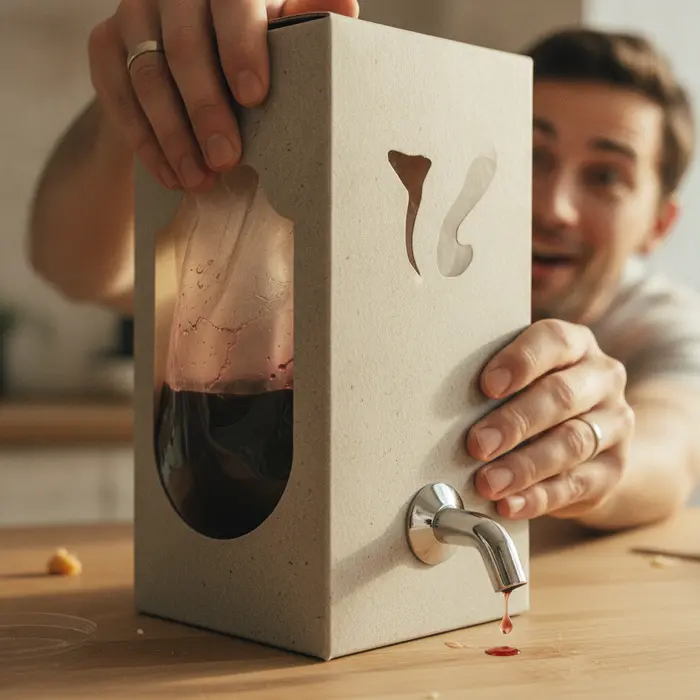
The airless vacuum environment
As wine is dispensed from the tap, the flexible inner bag collapses around the remaining liquid instead of pulling in outside air. This lack of headspace stops the oxidative degradation that quickly spoils traditional open bottles of wine.
Plastic polymers vs glass bottles
Modern wine bladders utilize food-grade, multi-layer films, often featuring an ethylene vinyl alcohol (EVOH) barrier layer. This advanced material prevents oxygen transmission through the plastic, maintaining fresh fruit characteristics over extended storage periods.
Shelf life after opening
While a standard bottle of wine begins to oxidize and degrade within three days of uncorking, a vacuum-sealed boxed wine remains sound for over a month. For example, enjoying a single glass of crisp Sauvignon Blanc with a mid-week grilled chicken salad is simple and waste-free because the remainder stays perfectly fresh in the fridge for weeks.
Is boxed wine actually high-quality today?
Modern boxed wine frequently features premium, estate-grown juice that rivals the quality found in traditional glass bottles. Wine producers across the globe are using this format to package serious daily drinkers without the added cost of glass packaging.
The shift toward high-quality boxed wine is a major victory for consumers who want premium daily-drinking options without paying for the shipping weight of heavy glass bottles.
Shifting from cheap plonk to premium varietals
Historically, the bag-in-box format was reserved for mass-produced, sweet blends with minimal character. Today, you can find high-quality Cabernet Sauvignon, crisp Sauvignon Blanc, and dry Provencal rose packaged in premium boxes.
Top regions embracing the format
Renowned wine regions in France, Italy, and Spain now package high-altitude whites and food-friendly reds in 3-liter bags. These regions recognize that premium everyday wines do not require heavy glass bottles to deliver excellent flavor and structural balance.
Blind tasting results and consumer perception
In numerous professional blind tastings, experienced sommeliers have struggled to differentiate between boxed and bottled versions of the same wine. This proves that when kept away from oxygen, the packaging material has zero negative impact on immediate flavor quality.
What are the environmental benefits of boxed wine?
Boxed wine features a carbon footprint that is up to eighty percent lower than traditional glass bottles due to lighter packaging materials and highly efficient shipping geometry. Using cardboard and lightweight plastics significantly reduces the energy required to transport wine from vineyard to table.
Carbon footprint of glass versus cardboard
Glass manufacturing is an energy-intensive process that requires heating furnaces to extreme temperatures, whereas cardboard boxes require far less energy to produce. Additionally, cardboard is biodegradable and easily flat-packed for recycling.
Shipping efficiency and weight reduction
A standard glass bottle accounts for roughly forty percent of a filled bottle's total weight, meaning trucks burn extra fuel just to transport packaging. Cardboard boxes are lightweight and rectangular, which allows shippers to pack more wine into each delivery vehicle while using less fuel.
Recyclability of the packaging elements
While the outer cardboard box is universally recyclable, the inner plastic bag must be checked against local recycling guidelines. Many modern wineries are actively working to implement fully biodegradable or single-stream recyclable plastics for their inner bladders.
Best practices for serving and storing boxed wine
Serving boxed wine at the correct temperature and using proper glassware will greatly improve your overall tasting experience. Even though the wine comes from a cardboard box, treating it with the same respect as a bottled vintage ensures all aromatic profiles are fully expressed.
Ideal temperature settings for boxed reds and whites
Boxed white wines should be stored in the refrigerator and served chilled at around 45 to 50 degrees Fahrenheit. Boxed red wines benefit from being served slightly cool, around 60 to 65 degrees Fahrenheit, which keeps the alcohol from overpowering the fruit notes.
Choosing the right glassware for boxed options
Serving your wine in a high-quality glass will drastically enhance your sensory appreciation of the grape. To get the best results from a boxed Cabernet or Tempranillo, review how to choose the perfect red wine glass to capture the aromas.
Decanting boxed wine to enhance aromas
Pouring your boxed wine into a decanter for fifteen to thirty minutes allows the wine to breathe and open up. This simple step mimics the aeration process of opening a high-quality bottle and softens any tight youthful tannins.
How to extract the last drop of wine elegantly?
Extracting the final glass of wine from a box can be done cleanly and efficiently without turning the kitchen into an accidental performance art piece. Following a structured approach keeps your counter clean and prevents unwanted spills.
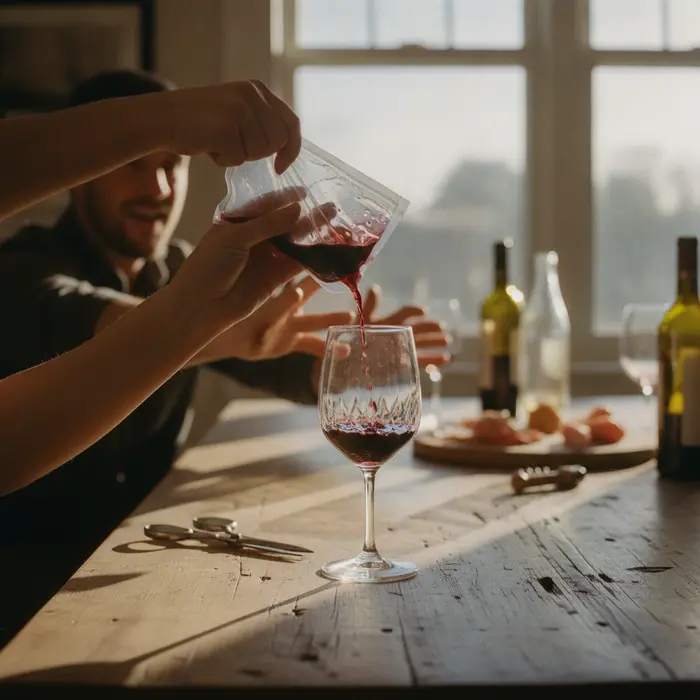
The scissor trick for cutting the bladder
Cutting open the corner of the deflated bladder with kitchen shears is the most effective way to access the final ounces of wine. This method allows you to pour the remaining liquid directly into a glass or storage container.
The gravity tilt method
Tilting the entire cardboard box forward at a forty-five degree angle before pressing the dispenser button allows gravity to feed the remaining wine directly into the valve. This keeps you from having to tear open the box prematurely.
Gravity feeding into a decanter
Emptying the remaining wine directly into a small decanter or carafe is a practical solution for entertaining. This ensures your guests can enjoy the wine without ever seeing the physical box or bladder on the dining table.
- Remove the inner foil bladder completely from the outer cardboard box once the tap stops dispensing naturally.
- Hold the bag upside down with the dispenser valve pointing upward to let the remaining wine settle at the bottom.
- Carefully snip one of the bottom corners of the foil bag with a clean pair of kitchen scissors.
- Tip the bag over a decanter or glass, letting the remaining wine drain out of the freshly cut corner.