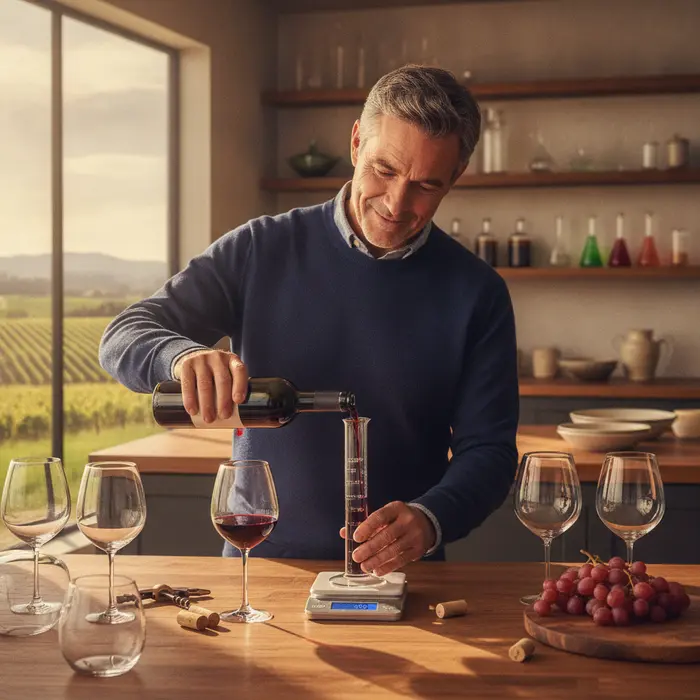
Why does measuring wine matter to a chemist?
A chemist views a bottle of wine as a complex aqueous solution containing hundreds of volatile organic compounds. By measuring the volume precisely, a scientist ensures that every pour receives an identical ratio of liquid volume to surface area, ensuring uniform aeration. This controlled approach removes the variables that can alter tasting notes from one glass to the next.
Precision in managing alcohol by volume (ABV)
Measuring your pour allows you to know exactly how much pure ethanol you are consuming. Because wine ABV ranges from 5.5% in light sparkling varieties to over 15% in bold warm-climate reds, a slight variation in pour volume drastically changes alcohol consumption. Utilizing precise measurements ensures that your Friday evening remains relaxing without unexpected morning headaches.
The mathematics of standard drink calculations
A standard drink in most culinary contexts is defined as five fluid ounces of wine at roughly 12% alcohol. When you pour by eye, you often over-serve by 20% or more, transforming a simple two-glass evening into three or four standard servings. A chemist avoids this margin of error by utilizing measured vessels to guarantee exact serving compliance.
Controlling oxidation rates through surface area exposure
Oxygen is both the friend and enemy of open wine, initiating chemical reactions that soften tannins but eventually dull the fruit flavors. By portioning out wine in exact volumes, you control the ratio of liquid surface area to the air trapped in the glass bowl. This deliberate contact ensures that your wine decants at a predictable, ideal rate during wine service techniques that improve flavor.
How does pour size affect the tasting experience?
The volume of wine in your glass directly dictates how effectively the volatile compounds can travel to your nose. Overfilling a glass reduces the headspace, trapping key aromas inside the liquid rather than letting them bloom. Maintaining a smaller, measured pour allows you to fully experience the aromatic bouquet as you swirl.
Maximizing the glass headspace for volatile aromatics
The headspace of a wine glass is the empty air space above the liquid level where vaporized aromatic compounds collect. If you fill a glass to the brim, there is no physical room for these delicate esters and aldehydes to congregate. Keeping the pour to exactly five ounces or less allows the aromas to concentrate, helping you taste wine like a sommelier with maximum accuracy.
Keeping temperature stable inside the glass bowl
Wine warms up quickly when exposed to ambient room temperatures and the warmth of your hands. Smaller, measured portions ensure that you finish the wine in your glass before it climbs past its ideal drinking temperature. This is especially vital for crisp white wines and sparkling selections that lose their charm when warm.
Managing wine calories per serving
Precision pouring is the most effective tool for those consciously managing wine calories by type without giving up their favorite wines. Because sweet wines and high-alcohol reds contain significantly more calories per ounce, measuring the volume protects your dietary goals. A chemist-style measurement eliminates guessing and keeps your Friday indulgence completely transparent.
"In the laboratory of life, wine is the ultimate buffer solution. Treating it with structural precision only enhances its organic complexity." - Anonymous Wine Chemist
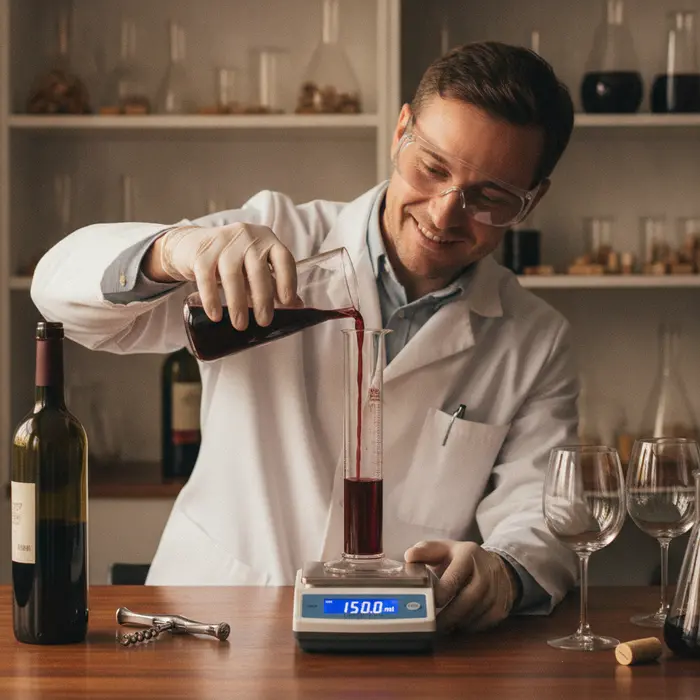
What laboratory tools can improve your wine setup?
Adapting professional scientific tools for home wine service can actually improve your preservation and serving processes. Lab-grade glass is highly thermal-resistant and free from chemical contaminants that might alter delicate notes. Incorporating these tools brings a clean, modern aesthetic to your home bar.
Graduated cylinders for flawless dessert wine portions
Graduated cylinders made of borosilicate glass are perfect for measuring out highly concentrated dessert wines like Sauternes or Port. Because these sweet wines are enjoyed in smaller two-to-three-ounce pours, small errors in volume represent major percentage deviations. A tall, thin cylinder makes it simple to read the meniscus at eye level for flawless accuracy.
Erlenmeyer flasks as efficient decanting vessels
An Erlenmeyer flask features a broad, flat base and a narrow conical neck, mimicking the exact shape of high-end modern decanters. The wide bottom provides ample surface area for oxygen contact, while the narrow neck traps volatile aromas. These flasks are durable, easy to clean, and fit perfectly into any scientific-themed wine setup.
Precision pipettes for testing acidity and blending
Amateur winemakers and serious enthusiasts use graduated pipettes to blend different varietals at home or to test pH levels. If you want to experiment by blending a touch of Cabernet Sauvignon into your Merlot, a pipette allows you to scale down the measurements. This micro-blending mimics the actual formulation processes used in commercial cellars.
How to measure the perfect pour at home?
You do not need a degree in chemistry to execute standard pours with complete consistency in your own kitchen. Establishing a systematic approach to serving removes the guesswork and ensures that every guest receives an equal share. Here is how you can train your eye and hand using common household tools.
The standard five-ounce kitchen pour technique
A standard bottle of wine contains 750 milliliters, which yields exactly five five-ounce (148 ml) servings. Training yourself to hit this target consistently ensures you get the maximum value out of every bottle. Utilizing a measuring cup filled with water is an excellent way to practice and visualize this specific volume in your favorite glassware.
Using glassware landmarks to guide your hand
Most high-quality wine glasses have built-in physical indicators that signal the perfect pour line. On a standard Bordeaux or Burgundy glass, the widest part of the bowl usually corresponds to a perfect four-to-five-ounce portion. Pouring to this exact point maximizes the liquid surface area, allowing the wine to breathe optimally.
Utilizing digital kitchen scales for weight-based accuracy
For absolute precision without using ugly plastic measuring cups, a digital kitchen scale is the ultimate sommelier tool. Because wine has a density very close to water, one fluid ounce of wine weighs approximately one ounce (or 29.5 grams). Placing your glass on a tared scale and pouring until you reach 148 grams guarantees a perfect five-ounce pour every time.
- Place your wine glass onto the center of a digital kitchen scale.
- Turn on the scale and press the tare button to set the weight reading to zero.
- Slowly pour your wine until the display reaches exactly 148 grams (equivalent to 5 ounces).
- Remove the glass, swirl gently to release aromatics, and enjoy your perfectly portioned wine.
Chemical compounds that dictate wine personality
Every bottle of wine is a fluid ecosystem of chemical compounds that determine its taste, texture, and aging potential. From the dry grip on your tongue to the bright fruit aromas, these interactions are entirely predictable. Understanding these compounds changes how you select and pair your bottles.
Phenolic compounds and the structure of tannins
Tannins are natural polyphenols found in grape skins, seeds, and oak barrels that give red wine its drying, astringent structure. These molecules bind to the proteins in your saliva, which is why high-tannin wines feel dry in the mouth. When selecting starters for wine, balance high tannins with rich, fatty charcuterie to soften the bite.
Volatile acidity and ester production in fermentation
Esters are the organic compounds formed during fermentation that provide fruity and floral aromas, such as banana, pear, or rose. Volatile acidity, caused primarily by acetic acid, adds a sharp, vinegar-like lift when present in small, balanced quantities. Understanding these elements helps you isolate specific aromatic components during blind tastings.
Sulfur dioxide and its role in microbial stability
Sulfur dioxide (SO2) is a crucial preservative used by winemakers to prevent oxidation and keep unwanted bacteria from spoiling the wine. While often blamed for hangovers, sulfites are naturally occurring byproducts of fermentation present in all wines. This compound is essential for ensuring that wines can be aged like fine wine safely over decades in your cellar.
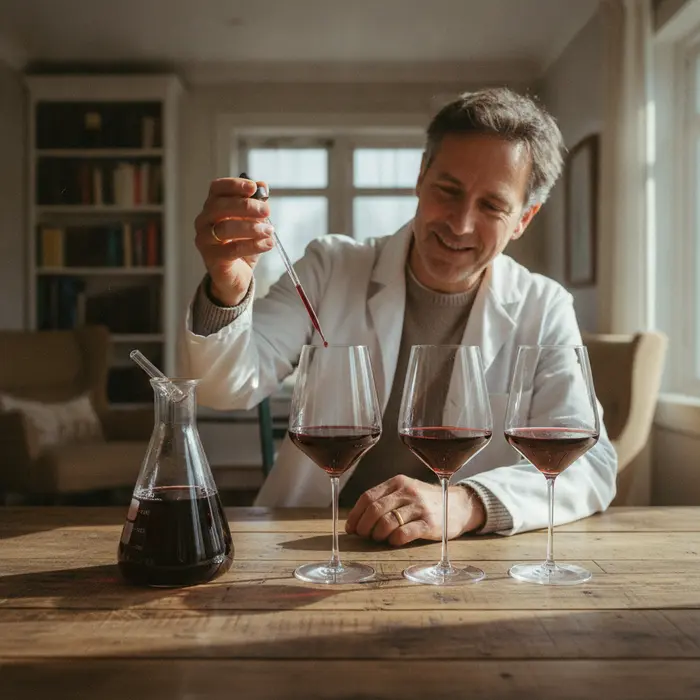
Serving temperatures verified by science
Temperature directly controls the rate at which aromatic molecules escape the surface of the wine and enter your olfactory senses. If a wine is served too cold, its aromatic compounds remain locked in the liquid, leaving it tasting flat. If served too warm, the alcohol volatilizes too quickly, overpowering the wine's delicate layers.
Chilling windows for crisp white wines
White wines benefit from lower temperatures because chillness preserves their bright acidity and delicate floral notes. However, serving a Chardonnay straight from a near-freezing kitchen refrigerator masks its complex oak and butter flavors. Aim for a scientific range of 45 to 50 degrees Fahrenheit (7 to 10 degrees Celsius) for the best sensory balance.
Ambient room temperature myths for heavy reds
The classic rule to serve red wine at room temperature dates back to historic European estates that rarely warmed above 65 degrees Fahrenheit (18 degrees Celsius). Modern centrally heated homes are far too warm for red wines, causing the alcohol to dominate the flavor profile. Popping a red bottle in the refrigerator for twenty minutes before serving lowers it to a much better temperature.
Cellular chemical activity at different thermal points
At a molecular level, heat increases the kinetic energy of the molecules in your wine, speeding up evaporation and chemical breakdown. By maintaining a stable, cool storage environment, you slow down these reactions, preventing premature aging. This thermodynamic control is the secret to protecting your collection from heat damage.
| Wine Style | Optimal Temperature (F) | Optimal Temperature (C) | Standard Pour Volume (oz) |
|---|---|---|---|
| Sparkling (e.g., Cava, Champagne) | 40 - 45 | 4 - 7 | 4.0 |
| Crisp White (e.g., Sauvignon Blanc) | 45 - 50 | 7 - 10 | 5.0 |
| Full-Bodied White (e.g., Chardonnay) | 50 - 55 | 10 - 13 | 5.0 |
| Light Red (e.g., Pinot Noir) | 55 - 60 | 13 - 16 | 5.0 |
| Bold Red (e.g., Cabernet Sauvignon) | 60 - 65 | 16 - 18 | 5.0 |
| Dessert Wine (e.g., Port, Sherry) | 55 - 65 | 13 - 18 | 3.0 |
Choosing the right glassware for chemical dispersion
The shape of a glass acts as a physical engineering tool designed to direct wine to specific parts of your tongue and nose. By understanding the physics of glass design, you can match your favorite varietals to the proper vessel. This simple adjustment completely changes how you perceive sweetness, acidity, and tannin structures.
Wide-bowl glasses for volatile phenol liberation
Wide-bowl glasses, such as Burgundy balloons, provide a massive liquid-to-air interface that accelerates the evaporation of delicate phenols. This shape is perfect for highly aromatic, thin-skinned grapes like Pinot Noir or Nebbiolo, which need room to express themselves. The wide bowl allows you to capture those complex, earthy aromas without losing them to the room.
Narrow openings for delicate sparkling aromatics
Sparkling wines rely on a narrow, tall design to preserve their carbon dioxide bubbles, keeping the wine effervescent for longer. A wider opening would allow the carbonation to dissipate too quickly, resulting in a flat beverage. A narrow flute or a tapered tulip glass concentrates the delicate yeast notes while maintaining a steady stream of bubbles.
Stemmed versus stemless thermal conductivity
The glass stem is not just a decorative element; it prevents the heat of your hand from warming the wine. Holding a stemless glass transfers thermal energy directly from your palm into the liquid, quickly raising its temperature. Utilizing stemmed glasses keeps your wine at its scientifically optimal temperature throughout your tasting session.
How do you preserve leftover wine scientifically?
Once a cork is pulled, the degradation of the wine begins as oxygen rushes into the empty space. While you cannot stop oxidation completely, you can use physics and chemistry to slow the process down dramatically. Using the right preservation techniques can save your bottles for days or even weeks.
Argon gas displacement for complete oxygen barrier
Argon is an inert, non-reactive gas that is significantly heavier than oxygen, allowing it to sink to the surface of your wine. Spraying a layer of argon into an open bottle creates a physical blanket that prevents oxygen from contacting the liquid. This simple gas-displacement method is the most scientifically effective way to preserve an open bottle.
Vacuum extraction pump limitations and benefits
Vacuum pumps work by drawing the air out of an open bottle to create a partial vacuum, lowering the oxygen level. While useful, these pumps cannot achieve a perfect vacuum, and they can pull volatile aromatic compounds out of the wine. For short-term preservation of robust red wines, however, they remain a practical, cost-effective option.
Temperature drops to slow down oxidation kinetics
The simplest scientific preservation method is to store your open wine bottle in the cold refrigerator, regardless of its color. Lower temperatures slow down the chemical reaction rates that cause wine to oxidize and spoil. Just remember to bring your reds back up to their proper temperature before serving them again.